


What Is the Difference Between a Dresser and a Chest of Drawers?
Have you ever pulled open a bottom bedroom drawer, only to have it hit your mattress before you could reach your sweaters? Or brought home a wide dresser that left barely enough room to open the closet door?
A bedroom dresser is a wide, waist-high cabinet (60 to 68 inches wide, 32 to 38 inches high, 18 to 20 inches deep) with 6 to 9 drawers in two or three columns; about 7 in 10 online dressers run 60 to 69 inches wide for a mirror or TV. A chest of drawers (or tallboy) is a narrow vertical cabinet (34 to 40 inches wide, 48 to 56 inches high, 18 to 20 inches deep) stacking 5 to 6 drawers in one column; about 85% online run 30 to 44 inches wide to save wall space.
The dimensions and prices below come from our bedroom catalog, and our consultants, design advisors, and in-house delivery teams across Ohio, Kentucky, and Indiana can help you compare Good, Better, and Best tiers alongside our King vs. Queen bed clearance guide and nightstand guide.
Standard Proportions: Horizontal Dresser vs. Vertical Chest
Shared 18" to 20" Cabinet DepthHow Do a Dresser and a Chest of Drawers Compare Side by Side?
Start with the core dimensions, clearances, and price ranges side by side:
| Planning Factor | Horizontal Dresser (Double or Triple) | Vertical Chest of Drawers (Tallboy) |
|---|---|---|
| Standard Width | 60 to 68 in. (7 in 10 online run 60 to 69 in.; singles start at 48 in., triples reach 72 in.). | 34 to 40 in. (85% online run 30 to 44 in.; lingerie chests run 22 to 26 in.). |
| Standard Height | 32 to 38 in. (72 to 78 in. with an attached dresser mirror). | 48 to 56 in. (gentleman’s chests reach 58 to 62 in.). |
| Cabinet Depth | 18 to 20 in. closed front to back. | 18 to 20 in. closed front to back. |
| Drawer Layout | 6 to 9 drawers in 2 or 3 columns; easiest for couples to split side by side. | 5 to 6 drawers in 1 column (often with a split top row) in half the wall width. |
| Typical Price | $600 to $1,800 (entry near $250; mirror or solid hardwood adds cost). | $500 to $1,500 (entry near $200; costs less than its matching dresser). |
| Primary Downside | Needs a 6-foot+ clear wall and wider stairwell turns on delivery day. | High 48-to-56-in. top reach; must be wall-anchored against tip-overs. |
| Ideal Room Size | 12 × 12 ft.+ with a 6-foot+ uninterrupted wall. | 10 × 10 to 11 × 12 ft., narrow wall piers, or secondary suite storage. |


How Much Does a Dresser vs. a Chest of Drawers Cost?
A chest of drawers costs less than its matching double or triple dresser because it uses a narrower frame and one column of drawers.
Horizontal Dresser Price Range
$600 to $1,800Most 6-to-9-drawer catalog dressers run $600 to $1,800 (entry near $250; solid hardwood or a mirror raises the total).
Vertical Chest Price Range
$500 to $1,500Most 5-to-6-drawer chests run $500 to $1,500 (entry near $200; adding a floor mirror or nightstands changes the room budget).
What Raises the Price of a Bedroom Dresser or Chest
- Wood Materials: Laminate over engineered core at entry, hardwood framing with veneers in mid-tier, and solid North American hardwoods at the top.
- Joinery & Glides: English or French dovetail boxes on ball-bearing or soft-close undermount glides cost more than stapled boxes on rollers.
- Interior Details: Multi-step finishes, felt jewelry trays, cedar bottom drawers, and dust panels.
How Much Floor Space Do You Need to Open the Drawers?
Both bedroom dressers and chests of drawers measure 18 to 20 inches deep closed, but pulling a drawer open and standing behind it takes nearly five feet of room depth. Use the 3-Zone Open-Drawer Clearance Formula:
Closed Cabinet Depth
18 to 20 in.From baseboard to closed drawer fronts (allow 1 inch if thick molding or a plug sits behind the frame).
Open Drawer Extension
14 to 16 in.Full-extension glides slide the drawer box 14 to 16 inches forward into the walkway.
Standing & Kneeling Space
24 in.Leave 24 inches of clear floor in front of the open drawer to stand or kneel comfortably.
The 3-Zone Open-Drawer Clearance Diagram
36" Closed Walkway • 38" to 40" Active ZoneThe Clearance Math: 14 to 16 in. open drawer + 24 in. standing space = 38 to 40 in. active front zone (56 to 60 in. wall-to-heel depth with the cabinet). Keep a 36-inch closed walkway per the 2010 ADA Standards (Section 403.5.1), or 42 to 48 inches so a partner can walk past.
Which One Fits Your Bedroom Wall, and When Should You Skip Both?
With both pieces at 18 to 20 inches deep, choose based on the wall width left after placing your bed (see our King vs. Queen bed clearance guide).
When to Choose a Wide Dresser
12 × 12 ft.+ Rooms- 6-Foot+ Wall: Plan for 72 to 80 inches of clear wall so a 60-to-68-inch dresser clears trim and drapes.
- Opposite or Beside the Bed: Works in rooms 12.5 feet+ deep or on a side wall with 38 to 40 inches of front clearance.
- Shared Storage: Two or three columns let couples split sides neatly.
When to Choose a Vertical Chest
10 × 10 to 11 × 12 ft.- 42-to-48-Inch Piers: A 34-to-40-inch chest fits short walls between closet and bathroom doors.
- Older Multi-Window Bedrooms: Historic homes break up walls with tall windows or radiators, leaving narrow piers built for a tall chest (see our older Cincinnati homes space-planning guide).
- Dual Symmetry: Two 36-inch chests flanking a window give 10 to 12 drawers without blocking daylight.
The Honest Downsides of Each Piece
Real Downsides of a Dresser
- Long Wall Needed: At 60 to 68+ inches wide, it crowds curtains, vents, or multi-door rooms.
- Tight Stair Turns: Harder to pivot on 90-degree landings than a 36-inch chest.
- Surface Clutter: Six feet of top collects clutter without a mirror or TV plan.
Real Downsides of a Chest of Drawers
- High Top Reach: At 48 to 56 inches tall (58 to 62 in. on gentleman’s chests), shorter users cannot see into top drawers flat-footed.
- Higher Tip Risk: Vertical stacking raises the center of gravity, so wall anchoring is essential.
- Limited Top & Split: Too tall and narrow for unmounted TVs, and harder for couples to split side by side.

Can You Put a TV or Mirror on Top of a Chest of Drawers, or Do You Need a Dresser?
The 16-to-20-inch height gap between a dresser and a chest determines whether the top works for a TV or a mounted mirror.
1. Bedroom TV Viewing Height When Reclining in Bed
Propped on two pillows, your eye level sits 38 to 44 inches high. A 32-to-38-inch dresser holds a 50-to-65-inch TV at a natural angle with 60 to 68 inches of width for wide legs. A 48-to-56-inch chest (or 58-to-62-inch gentleman’s chest) pushes the screen near the ceiling on a narrower 34-to-40-inch top.
2. Dresser Mirror Proportions & Light Reflection
Mounting one of our bedroom mirrors over a dresser bounces daylight across the room. Follow three proportion rules:
- 65% to 80% Width Rule: Pick a mirror 65% to 80% of the dresser’s width (42 to 50 in. over a 64-in. dresser).
- 8-Foot Ceiling Clearance: A 36-inch dresser plus a 38-to-42-inch mirror stands 74 to 78 inches tall, leaving 18 to 22 inches below an 8-foot ceiling.
- Floor Mirrors for Chests: Pair a 52-to-56-inch chest with a separate full-length floor or door mirror.


How Can You Tell a Well-Built Dresser or Chest from a Cheap One?
Pull a drawer all the way open and check four interior details (see how our bedroom collections are ranked by Good, Better, and Best quality):
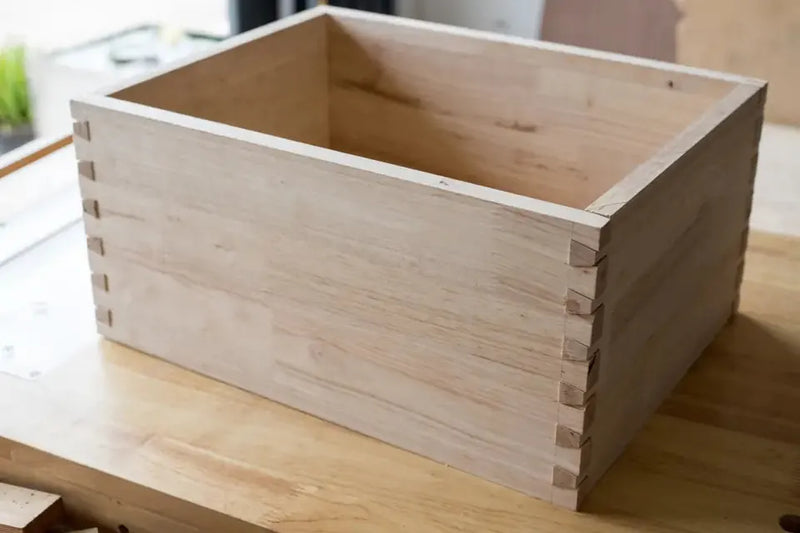
English vs. French Dovetail Joinery
Skip stapled corners that loosen over time. Look for English dovetails (interlocking pins and tails) or French dovetails (grooved front joints) that lock under heavy clothing loads.
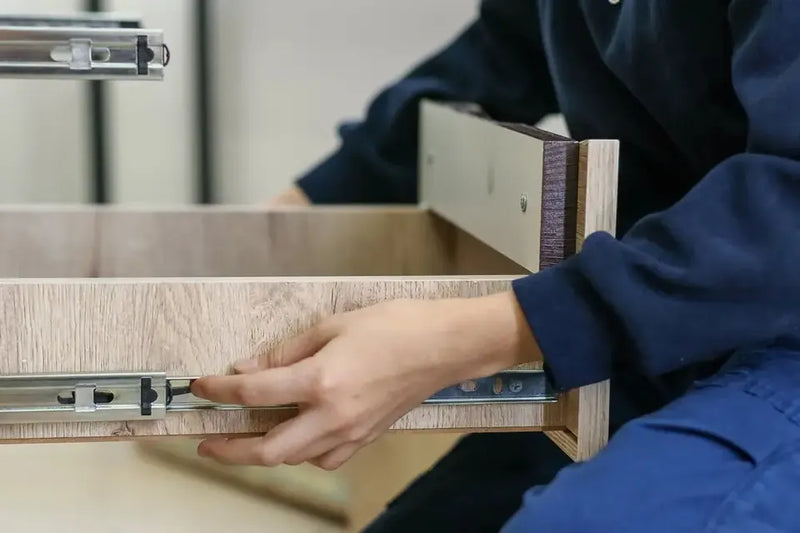
Ball-Bearing, Undermount & Center Glides
Steel ball-bearing and undermount soft-close glides give full-extension access to the back of the box. Solid-hardwood cabinets may also use waxed wood-on-wood guides with built-in stops.
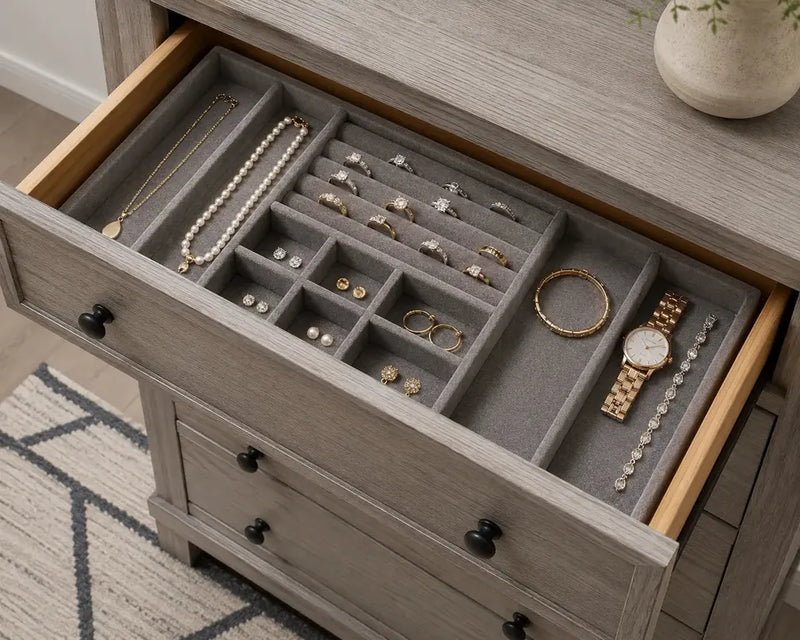
Felt Top Liners & Cedar Bottom Drawers
Felt-lined top drawers protect watches and jewelry from scratches. Unsealed cedar bottom drawers keep off-season sweaters dry and fresh smelling.
Interior Dust Panels & Case Stability
Horizontal dust panels between rows keep lint off lower clothes and brace the frame. Compare core stability in our solid wood vs. wood veneer guide and top real wood furniture brands guide.

| Feature | Good Tier (Entry & Guest) | Better Tier (Primary Room) | Best Tier (Solid Hardwood) |
|---|---|---|---|
| Best Use | Guest rooms, kids’ rooms, or first apartments. | Daily primary bedroom storage with upgraded hardware. | Long-term primary suites built from solid hardwoods. |
| Materials | Engineered wood with laminate or basic veneers. | Hardwood framing with real wood veneers over stable cores. | Solid North American hardwoods (see our real wood brands guide, including quote-only Stickley). |
| Joinery | Rabbeted, doweled, or basic French-dovetail fronts. | Four-corner French & English or all-English dovetail boxes. | Solid hardwood English dovetails with thick wood bottoms. |
| Glides | Three-quarter roller or basic center tracks. | Full-extension steel ball-bearing or undermount glides. | Soft-close undermount glides or fitted hardwood guides. |
| Interiors | Uniform drawers without specialty linings. | Felt top drawers, cedar bottom drawers, dust panels. | Divided jewelry trays, full dust panels, custom finishes. |
How Do You Keep a Tall Chest or Dresser from Tipping Over?
Pulling loaded drawers open shifts weight past the front feet, especially on a 48-to-56-inch chest (or 58-to-62-inch gentleman’s chest) and in homes with children. Under 16 CFR Part 1261 and the CPSC and ASTM F2057-23 standard, modern units are tested against clothing loads, carpet tilt, and open-drawer forces.
Use three protections at home:
- Drawer Interlocks: Many modern pieces allow only one drawer per column to open at a time.
- Wall-Anchoring Kits: Anchor a bracket or strap into a stud per the CPSC Anchor It! guide. Many ASTM F2057 pieces include a kit, though hardware varies by maker, so check your cabinet or use a stud strap.
- Leveling Glides on Carpet: Tack strips can tilt a cabinet forward; adjust front leveling feet so the frame sits level or leans slightly toward the wall.

What Should You Measure Before You Shop for a Dresser or Chest?
Before shopping for dressers or chests of drawers, Fairfield Store Manager Caroline Rhinehart recommends checking the sightline and walking path from your bedroom door:
Your 4-Step Pre-Shopping Bedroom Measurement Checklist
Follow our guide on how to measure for furniture and check four bedroom details:
Baseboards & Outlets
Measure wall width along the baseboard, and note outlets, switches, sills, and vents so the cabinet does not cover them.
38-to-40-Inch Front Zone
Tape the 18-to-20-inch cabinet depth on the floor, then measure 38 to 40 inches forward for open drawers and a 36-inch walkway.
Stairs & Door Frames
Cabinets arrive in one piece (full-service deliveries include setup unless noted). Check our delivery prep checklist and measure 90-degree stair turns.
Reach & Wood Tone
Bring daytime room photos, test flat-footed reach into a 48-to-56-inch chest’s top drawer, and pull showroom drawers open to test the glides.
What Else Do Shoppers Ask About Dressers and Chests of Drawers?
Direct answers to seven common bedroom storage questions:
What is the main difference between a dresser and a chest of drawers?
A dresser is a wide, waist-high cabinet (60 to 68 inches wide, 32 to 38 inches high, 18 to 20 inches deep) with 6 to 9 drawers in two or three columns. A chest of drawers is a narrow vertical cabinet (34 to 40 inches wide, 48 to 56 inches high, 18 to 20 inches deep) with 5 to 6 stacked drawers.
How much clearance do you need in front of a dresser or chest of drawers?
Leave a 36-inch closed walkway and a 38-to-40-inch active front zone (14 to 16 inches of open drawer extension plus 24 inches of standing space), or 42 to 48 inches for two people to pass.
How much does a bedroom dresser cost compared to a chest of drawers?
Most catalog dressers run $600 to $1,800 (entry near $250) and most chests run $500 to $1,500 (entry near $200). A chest costs less than its matching dresser because it uses one drawer column instead of two or three.
Which holds more clothes: a 6-drawer dresser or a 5-drawer chest?
A 6-drawer double dresser holds more total folded clothing across two columns, while a 5-drawer chest holds bulky sweaters in deep lower drawers using half the wall width.
Can you put a TV on top of a chest of drawers instead of a dresser?
A waist-high dresser (32 to 38 inches high) works better for a bedroom TV because it places the screen near reclining eye level (38 to 44 inches high) and fits wide TV legs, whereas a 48-to-56-inch chest sets the screen too high.
What is the difference between English dovetail and French dovetail drawers?
Both are interlocking wood joints stronger than stapled corners: English dovetails use interlocking pins and tails at the front and back corners, while French dovetails slide an angled side tongue into a groove behind the drawer front.
Do dressers and chests of drawers come with anti-tip safety hardware?
Many modern dressers and chests built to CPSC (16 CFR Part 1261) and ASTM F2057-23 standards include a wall-anchoring kit and drawer interlocks, though hardware varies by maker, so check your piece or use a stud strap.
Which Piece Would We Choose for a Typical Bedroom?
If you asked us to pick one piece for a typical 10 × 10 to 11 × 12-foot Cincinnati-area bedroom with a Queen bed, two windows, and a reach-in closet, we would choose a 34-to-40-inch 5-drawer chest of drawers over a wide dresser. It takes up 4.2 to 5.5 square feet of floor space instead of 7.5 to 9.5 square feet, fits onto a 42-to-48-inch wall section between door and window trim, and keeps the 36-inch closed walkway and 38-to-40-inch open-drawer zone clear around the bed. We save the 60-to-68-inch horizontal dresser for bedrooms that reach at least 12 × 12 feet with an uninterrupted 72-to-80-inch wall segment and a real need for a waist-high mirror or TV surface.
Need help getting your new bedroom piece home? Furniture Fair offers convenient delivery through our own in-house delivery team, making it easy to enjoy your new furniture with confidence.
Where Do These Measurements and Safety Rules Come From?
Dimensions, catalog shares, price ranges, 36-inch walkways, and the 38-to-40-inch open-drawer zone come from our bedroom catalog and residential planning standards; measure your piece and stairwell turns before ordering. Accessible walkway width follows Section 403.5.1 of the 2010 ADA Standards, and stability rules follow 16 CFR Part 1261, the CPSC Anchor It! Guide, and the CPSC Tipover Information Center.