Your Cart



Do Cooling Mattresses Really Work? A Guide to Cooling Mattress Technology
In This Article
- What Is a Cooling Mattress?
- Do Cooling Mattresses Actually Work?
- Why Do Some Mattresses Sleep Hot?
- Which Mattress Types Sleep Coolest?
- Cooling Technologies Explained
- Which Features to Pay Attention To
- Cooling Marketing Terms Decoded
- What We Tell Hot Sleepers in Our Stores
- Are Cooling Mattresses Worth It?
- What If You Like Your Mattress but Sleep Hot?
- Cooling Mattress FAQs
The Bottom Line: Cooling mattresses can help hot sleepers sleep more comfortably, but not every mattress marketed as "cooling" will sleep noticeably cooler than a standard one. What matters most is the overall construction. Coils and breathable materials create airflow, while PCM thermal buffers can help manage heat at the sleep surface. Dense foams tend to retain heat regardless of cooling claims. The best approach is to evaluate the entire mattress, not just one feature on the label.
Learn how cooling technology works in modern mattresses
If you sleep hot, you've probably noticed that every mattress brand now claims to have "cooling technology." The labels are everywhere: gel-infused, cool-to-touch, phase-change, copper-infused, breathable covers. But what does any of that actually mean for how you'll sleep at 2 a.m.?
We sell these mattresses face-to-face in our stores across Ohio, Kentucky, and Indiana. That means we hear the same questions over and over: Does cooling technology actually work? Is it worth spending more for? Which features matter and which are just marketing? This guide answers those questions honestly, based on what we've learned helping real shoppers compare cooling mattresses in person.

What Is a Cooling Mattress?
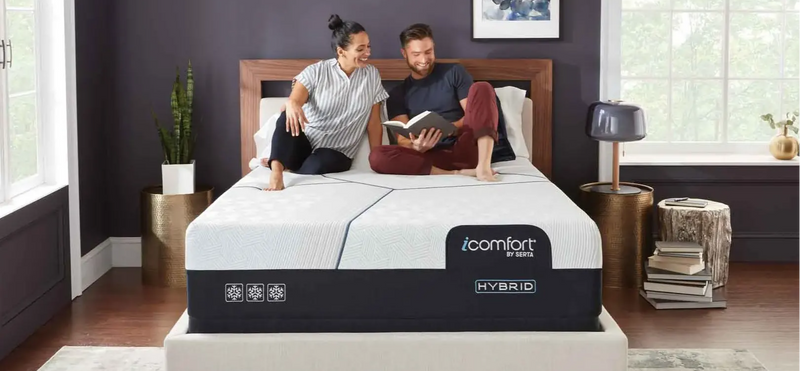
A cooling mattress is one deliberately engineered with materials designed to manage heat. That includes airflow through coil systems, heat-absorbing PCM thermal buffers, breathable covers, and open-cell or ventilated foams.
The key distinction is between a mattress engineered for cooling and one that simply contains a breathable material. Every mattress has some breathable components. A true cooling mattress uses multiple heat-management strategies working together.
Cooling vs. temperature regulation: "Cooling" usually refers to materials that actively draw heat away from your body. "Temperature regulation" is broader, meaning the mattress helps maintain a consistent sleep temperature throughout the night. Some materials feel cool initially but don't regulate temperature well over eight hours. That distinction matters more than most shoppers realize, and we'll come back to it later in this guide.
Do Cooling Mattresses Actually Work?
Yes, but not every mattress labeled "cooling" will sleep noticeably cooler.
Not every mattress marketed as "cooling" will actually sleep cooler than one without that label. That doesn't mean cooling technology is a gimmick. It means the label alone doesn't tell you whether a mattress will actually sleep cooler for you.
Here's what matters based on our experience selling these mattresses:
Construction matters more than any single ingredient. A hybrid with substantial airflow through its coil system has a structural cooling advantage over a dense all-foam mattress, even if the foam mattress says "cooling" on the label.
The initial feel can be misleading. A cool-to-the-touch cover makes a strong first impression in a showroom. But what matters over the course of a night is whether the entire mattress, from comfort layers to support core, allows heat to dissipate.
Dense foam tends to retain heat. That's a property of the material. Adding a cooling cover or gel infusion can help, but it won't completely change how a dense foam mattress manages heat.
Why Do Some Mattresses Sleep Hot?

Your body gives off heat throughout the night. When you lie on a mattress for hours, that heat transfers into the materials beneath you. If those materials can't dissipate that heat, it builds up.
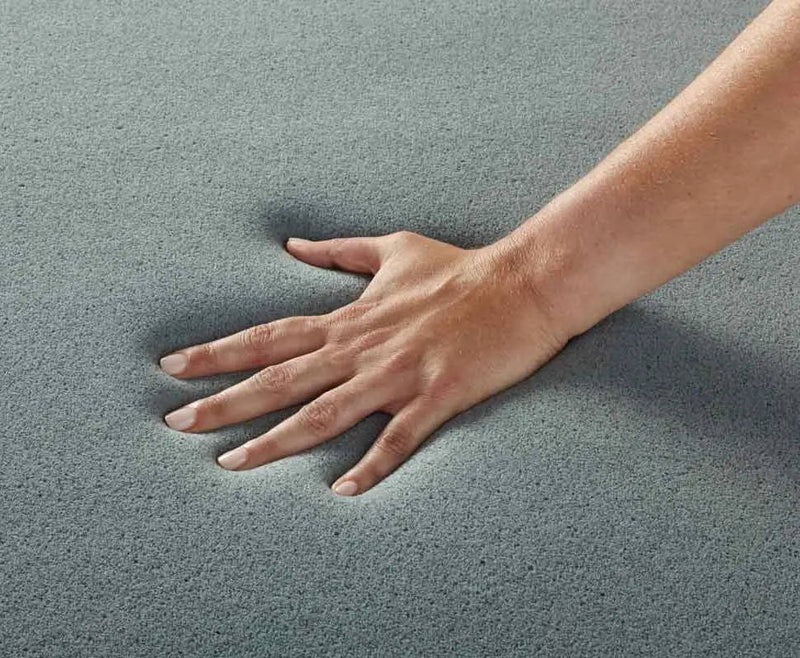
Memory foam is the most common culprit. Dense foam conforms closely to your body, which means more of your surface area is in direct contact with the mattress. That close contact transfers heat efficiently, and the dense cell structure traps it. The deeper you sink, the more heat gets trapped around you.
But the mattress isn't always the whole problem. Several factors contribute to sleeping hot:
- Room temperature: If your bedroom is warm, no mattress will fully compensate.
- Bedding: Heavy or non-breathable sheets trap heat against your body.
- Body weight: Heavier sleepers sink deeper into comfort layers, reducing airflow.
- Sleep position: How deeply you sink into the mattress and how much of your body stays in contact with the surface can affect how much heat gets trapped around you.
- Mattress age: Foam can break down over time, becoming less breathable and more likely to trap heat.
If you're sleeping hot, the mattress is a good place to start. But check your room and bedding too. Sometimes the fix is a different set of sheets, not a new mattress.
Which Mattress Types Sleep Coolest?
Different mattress types have different natural cooling properties. Here's a general comparison, with the caveat that specific construction varies by brand and model.
| Mattress Type | Typical Airflow | Why |
|---|---|---|
| Innerspring | Generally excellent | Open space between coils allows maximum airflow |
| Hybrid | Generally very good | Coils provide airflow, comfort layers add heat management |
| Latex | Generally very good | Open-cell structure, less body sink than memory foam |
| Memory Foam | Varies considerably | Dense foam can retain heat without effective cooling design |
Within each type, the specific materials and construction matter. A well-designed memory foam mattress with ventilated layers and PCM thermal buffers can sleep cooler than a basic innerspring with no airflow engineering. The type gives you a starting point, but the construction determines the actual performance.
Cooling Mattress Technologies Explained
Rather than simply listing technologies, let's organize them by what they actually do: manage airflow, dissipate heat, absorb heat, or manage moisture.
Airflow: Coils, Open-cell, and Ventilated Foam
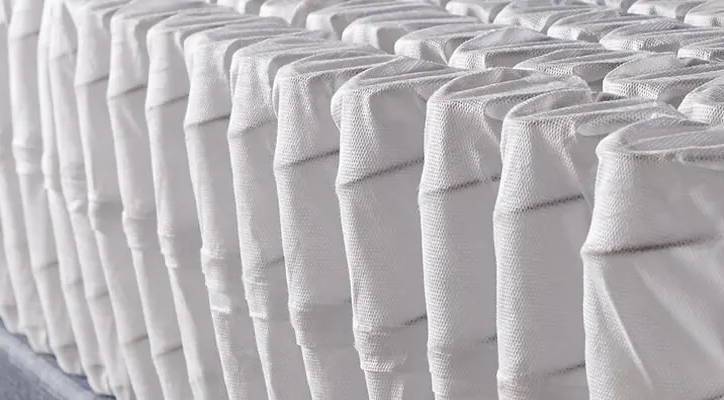
Pocketed coils are wrapped individually in fabric, which allows each spring to move independently. More importantly for cooling, the space between coils creates channels for air to circulate. In a hybrid mattress, this coil system works with the comfort layers above it to pull heat away from your body.
Open-cell foam has a cell structure where the bubbles inside the foam are connected, allowing air to pass through. Early memory foam featured a very dense, tight-pore open-cell structure with restricted cell membranes. This restricted airflow and caused sleepers to sink deeply into the foam, earning traditional memory foam its early reputation for sleeping hot. Modern manufacturing has shifted toward engineered, high-airflow open-cell structures and reticulated foams to significantly improve breathability. More open-cell foams dramatically increase airflow, but they also alter the feel, often making the mattress feel slightly lighter and faster to respond to movement compared to traditional dense memory foam.
Ventilated or perforated foam is foam with physical holes or channels cut into it. This is a separate approach from open-cell foam, though they're often confused. Ventilated foam creates direct air paths through the material, while open-cell foam improves airflow at the microscopic level. Some mattresses use both together.

Heat Absorption: Gel Foam and Phase Change Materials
Gel-infused foam is memory foam with gel microbeads or swirls mixed in. The gel absorbs some body heat, which can help the foam feel less warm. Here's the honest caveat: gel infusion alone doesn't guarantee a cooler mattress. If the foam is dense and the gel layer is thin, the effect may be modest. Gel foam works best as part of a larger cooling system, not as a standalone solution.
Phase Change Materials (PCMs) work as thermal buffers. Microencapsulated wax compounds absorb heat when your body warms the sleep surface and release it back as you cool down. The result is a more consistent surface temperature rather than a one-time cooling sensation. One caveat: if you lie in one spot for several hours, the PCM's cooling effect may gradually diminish until you shift position.
Other Cooling Materials: Latex, Copper, Graphite, and Breathable Covers
Latex is naturally breathable thanks to its open-cell structure. It also tends to sleep cooler than memory foam because it doesn't conform as closely to your body, allowing more airflow between you and the mattress. Natural latex and synthetic latex share this property, though natural latex is sometimes preferred for its durability.
Copper and graphite infusions are marketed as heat-dissipating materials. The idea is that these conductive materials help pull heat away from the body. The effect is real but generally modest compared to the impact of overall construction. Don't choose a mattress based solely on copper or graphite infusion.
Breathable and cool-to-touch covers are the layer you feel first. Cool-to-touch fabrics often use phase-change technology woven into the cover itself, creating an immediate cooling sensation when you lie down. Moisture-wicking covers pull sweat away from the body to help you stay dry. Both are useful, but remember: the cover affects how the mattress feels initially, not necessarily how it performs over eight hours.
Which Cooling Features Should You Pay Attention To?
Instead of trying to rank individual technologies, here's a framework for evaluating any cooling mattress you're considering. Think of it as a sequence, starting with what matters most and working down.
At a Glance: What to Evaluate
- 1. Start with overall construction
- A hybrid with substantial airflow through its coil system has a structural advantage over dense foam.
- 2. Look at the comfort layers next
- The amount and density of foam between you and that airflow matters.
- 3. Then consider temperature-regulating materials
- PCM, breathable fabrics, ventilated foam, and latex can improve performance as part of the complete mattress.
- 4. Be more skeptical of an ingredient by itself
- Gel, graphite, or copper in a foam doesn't automatically mean the finished mattress will sleep cool.
This framework helps you cut through marketing. When a brand leads with "copper-infused cooling foam," ask what the rest of the mattress looks like. Is there airflow underneath? How dense is the foam? Does the construction support sustained cooling, or is the copper layer the only cooling feature?
The upper comfort layers, the materials closest to your body, affect how the mattress feels when you first lie down. The support core underneath affects whether heat can actually dissipate over the course of the night. Both layers matter, but for different reasons and at different times.
Cooling Marketing Terms Decoded
When you shop for a cooling mattress, you'll encounter names involving "ice," "chill," "cool," "arctic," copper, graphite, gel, PCM, and cool-touch fabrics. These are marketing names, not technical specifications.
Don't shop based on the trademarked name. Ask what the material actually does.
Cool to the Touch
The cover feels cold when you first lie down. This is usually achieved with phase-change yarns woven into the fabric. The sensation is real and pleasant, but it typically lasts minutes, not hours. Once your body warms the cover to skin temperature, the initial cooling effect fades.
Tells you: how the mattress feels at first
Manages Heat Overnight
The entire mattress, from comfort layers to support core, allows heat to dissipate throughout the night. This depends on construction: coil airflow, foam density, ventilation, and the thickness of the layers between you and the airflow beneath.
Tells you: how cool you'll stay at 3 a.m.
Questions to Ask Instead of Reading the Label
- Does it increase airflow through the mattress?
- Does it absorb heat from your body?
- Does it move heat away from the sleep surface?
- Does it wick moisture to keep you dry?
- Does it feel cool initially, or manage heat throughout the night?
- Does it actively change temperature, or passively allow airflow?
The distinction between "cool to the touch" and "manages heat overnight" is one of the most important things to understand about cooling mattresses. A mattress can feel icy in the showroom and still sleep hot at 3 a.m. if the construction underneath doesn't allow heat to escape. Conversely, a mattress that doesn't feel particularly cool initially can sleep comfortably all night if it's built with good airflow and breathable layers.
What We Tell Hot Sleepers in Our Stores
One thing we've learned from helping hot sleepers compare mattresses in person: the cover tells you about the first ten minutes. The construction tells you about the next eight hours. A cool-to-the-touch cover can feel great when you first lie down, but that sensation fades once your body warms the surface. What matters overnight is whether the entire mattress, from the comfort layers down to the support core, allows heat to dissipate.
When we help someone evaluate a cooling mattress, we start with what's underneath them. If it's a hybrid with a good coil system, there's already airflow built in. Then we look at how much foam is between them and those coils, and how dense it is. A thick layer of dense foam over coils can still trap heat even if the cover feels impressive.
If they're considering an all-foam mattress, we pay more attention to whether it's ventilated or open-cell, because foam on its own doesn't breathe. The cooling cover matters, but it's the last thing we evaluate, not the first.
Shopping in person can tell you how a mattress feels when you first lie down, but that's only part of the story. A cool cover can feel great for the first few minutes and still sit on top of materials that hold onto heat. Since you can't recreate eight hours of sleep in a showroom, ask what's underneath the cover and how the entire mattress is built to manage heat.
Are Cooling Mattresses Worth It?
Cooling features typically add to the price of a mattress. Whether that's worth it depends on your situation. Here's an honest breakdown of when it makes sense and when you might be better off spending your money elsewhere.
Worth It If...
- You're a genuine hot sleeper who regularly wakes up sweating or kicking off blankets
- You love the feel of memory foam but it sleeps too hot for you
- You share a bed with a partner who runs at a different temperature than you
- You're experiencing hormonal changes that increase body heat at night
- Your bedroom stays warm year-round regardless of season
May Not Need It If...
- Your bedroom is already cool and well-ventilated
- You sleep comfortably and don't wake up hot
- You're mostly bothered by summer heat, not year-round sleeping hot
- You already have a breathable mattress with good airflow
- Your bedding is the problem, not your mattress
One more honest point: a well-constructed hybrid at a moderate price point can sleep cooler than an expensive all-foam mattress with "cooling" branding. Don't assume that spending more automatically means sleeping cooler. Construction and materials matter more than price and marketing labels.
What If You Like Your Mattress but Sleep Hot?
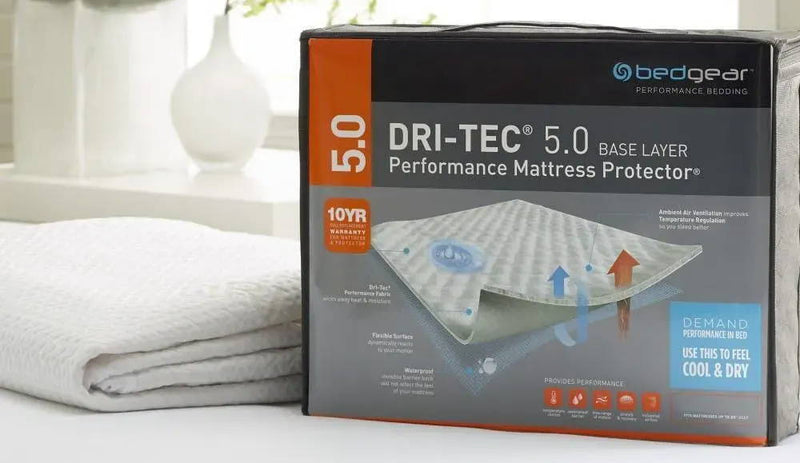
If your mattress is comfortable but you're sleeping hot, you don't necessarily need a new mattress. Several alternatives can help for less than the cost of a full replacement.
Cooling mattress protectors use many of the same technologies as cooling mattresses, with the advantage of being removable and washable. A cooling protector can add a layer of temperature regulation on top of your existing mattress, and it protects the mattress from wear at the same time.
Cooling toppers add a thicker layer of cooling material, usually gel-infused foam or latex. These can change how the surface feels, though they won't fix a mattress that fundamentally traps heat.
Before You Replace Your Mattress, Check These Too
- Sheets: Switch to breathable, moisture-wicking fabrics. Cooling sheets can make a bigger difference than you'd expect.
- Pillows: A cool pillow keeps your head and neck from trapping heat.
- Airflow: A fan, open window, or lower thermostat setting can solve the problem without any new purchase.
Here's the honest bottom line: if your mattress is fundamentally hot-sleeping because it's dense foam with no airflow, no topper or protector will completely fix that. But if the mattress is decent and you just need a little extra cooling, these alternatives are worth trying before you spend money on a full replacement.
Cooling Mattress FAQs
Do cooling mattresses really work?
Yes, cooling mattresses can help hot sleepers sleep more comfortably. However, not every mattress labeled "cooling" will sleep noticeably cooler than a standard mattress. What matters most is the overall construction, including airflow through the support core and the density of the comfort layers. A "cooling" label by itself doesn't guarantee cooler sleep.
What is the best cooling mattress material?
There isn't one best material. The most effective cooling comes from the combination of materials and construction, not any single ingredient. Coils provide airflow, PCM thermal buffers actively manage heat, latex offers natural breathability, and ventilated or open-cell foam improves air circulation. The best mattress for you depends on how hot you sleep, your preferred feel, and your budget.
Can a cooling mattress help with night sweats?
A cooling mattress can make you more comfortable if you experience night sweats by drawing heat away from your body and wicking moisture. However, a mattress doesn't treat the underlying cause of night sweats, which can include hormonal changes, medications, anxiety, or medical conditions. If night sweats are persistent or severe, talk to your doctor about the underlying cause.
How long does the cooling effect last?
That depends on the technology. Cool-to-touch covers create an immediate cooling sensation that typically lasts minutes, fading as the cover warms to your skin temperature. Technologies that manage heat throughout the night, like PCM thermal buffers and coil airflow, continue working as long as you're on the mattress. This is why construction matters more than the initial cool feel.
Are cooling mattresses more expensive?
Cooling features usually add to the price, but a higher price doesn't automatically mean cooler sleep. A well-constructed hybrid at a moderate price can sleep cooler than an expensive all-foam mattress with cooling branding. Focus on construction and materials rather than price as an indicator of cooling performance.
Can I make my current mattress cooler?
Possibly. Cooling mattress protectors, cooling toppers, breathable sheets, and moisture-wicking pillows can all help if your mattress is fundamentally comfortable but just sleeps warm. However, if your mattress traps heat because it's dense foam with no airflow, accessories won't fully solve the problem. Try the less expensive options first before replacing the whole mattress.
Finding the Right Cooling Mattress
Cooling technology in mattresses is real, but it works best when you look past the label and evaluate the whole mattress. Start with construction, then comfort layers, then specific cooling materials. Be skeptical of any single ingredient promised to solve all your heat problems. And remember that "cool to the touch" and "cool all night" are not the same thing.
If you're shopping for a cooler mattress, the best thing you can do is lie on a few options in person. Visit a Furniture Fair Sleep Center near you, or try our bedMATCH test to narrow down options based on your body profile and support needs. You can also schedule an appointment with one of our mattress specialists.
Download The Complete Mattress Buyer's Guide
Buying a mattress is no small decision. The Mattress Buyer's Guide will help you learn more about mattresses and help you understand your options and narrow down the mattresses that make sense for you.
Get Your FREE Guide