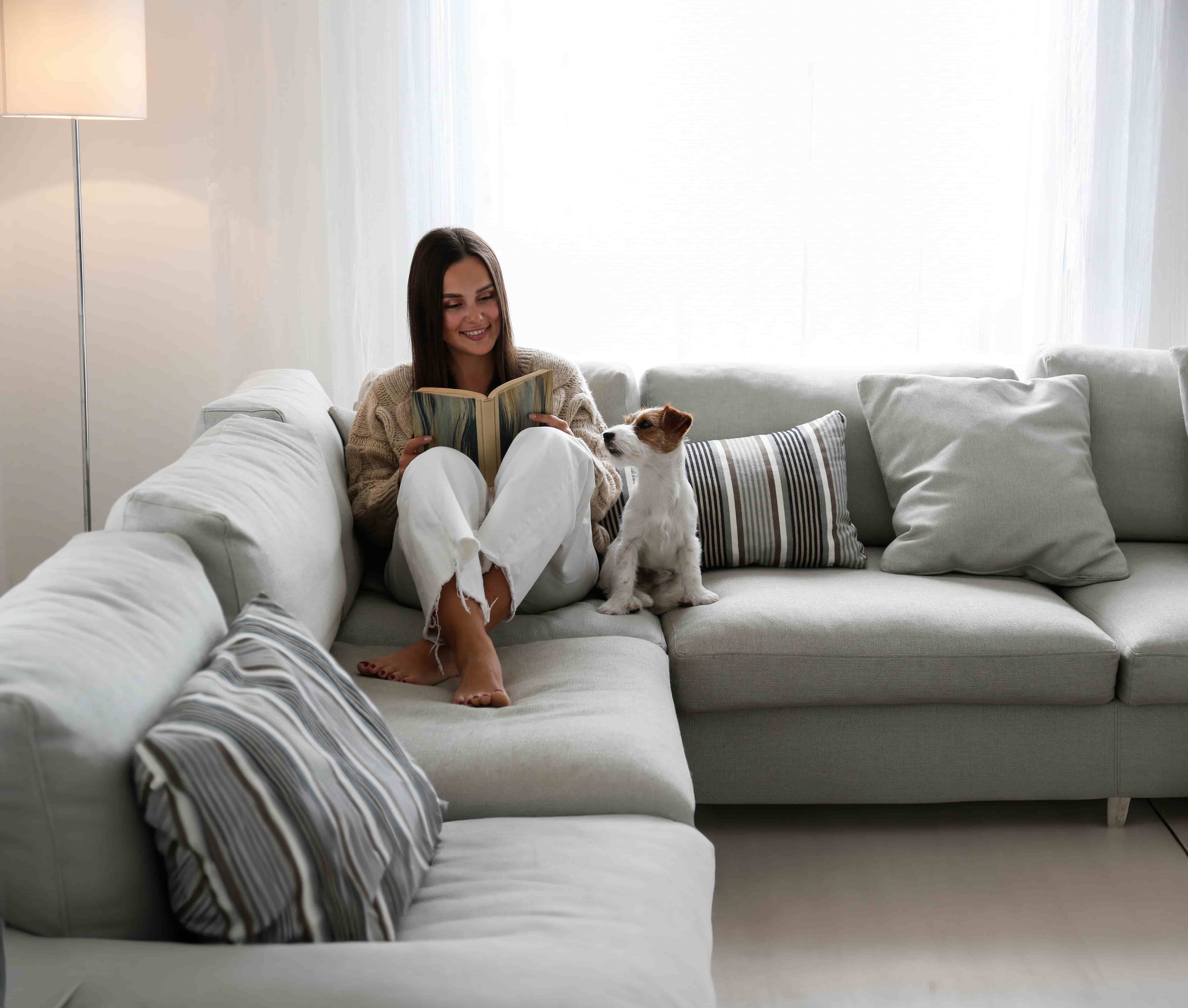
Right Facing vs. Left Facing Sectional: How to Choose the Best Orientation for Your Room
Demystifying LAF vs. RAF orientation rules, protecting your walkways, and picking the right layout before delivery day.
By Kyle Cannon•Published October 15, 2026•14 min read
Have you ever stood in the middle of your living room, looked at a sectional online, and caught yourself wondering: when they say “right-facing,” do they mean my right, or the couch’s right?
You are not alone. It is easily the single most common question our showroom teams hear every week across Ohio, Kentucky, and Indiana. Getting it mixed up is surprisingly easy when you are mentally picturing yourself lounging back on the cushions. To pick the right orientation without second-guessing yourself, follow the industry's universal standing rule: stand where your television or primary focal point sits and look directly at the front of the sofa. If the chaise lounge extends toward you along your right-hand side, you need a Right-Arm Facing (RAF) sectional. If it extends along your left-hand side, you need a Left-Arm Facing (LAF) sectional.
Nothing creates quite as much delivery-day dread as watching our delivery team carry in a brand-new sectional, only to realize the chaise cuts off your main hallway entrance, traps a sliding patio door, or covers a floor heat register under heavy upholstery. In this guide, we break down the straightforward standing test, the crucial walking clearances your room needs, and the five-minute painter's tape trick that guarantees your new sectional fits your floor plan flawlessly.
Positioning your sectional chaise along a wall or window perimeter preserves an open, inviting pathway through the primary living area.
Key Takeaways
What to Know Before You Order
Stand where the TV sits: Sectional orientation is always determined while standing in front of the sofa looking directly at the cushions, never while sitting down or reading a blueprint upside down.
Chaise on your right = RAF: Facing the front cushions, a chaise extending along your right side is Right-Arm Facing (RAF). A chaise on your left is Left-Arm Facing (LAF).
Protect main pathways: Position the chaise on the side that faces away from entry doors and hallways to keep traffic flow wide and inviting.
Preserve 36 inches of clearance: Keep at least 3 feet of open walking room between the tip of the chaise and any wall, doorway, or TV console.
Test with painter's tape: Spend five minutes taping the sectional's perimeter on your floor, then live with the outline for 24 hours to test daily traffic flow before you order.
The Golden Rule: Always Face the Sectional from the Front
Why is this distinction so universally misunderstood? Because as homeowners, our natural instinct is to imagine how we will use the furniture: kicking our feet up after a long day and looking out into the room. From that seated perspective, your right arm and left arm are the exact opposite of what the manufacturer stamped on the spec sheet.
When manufacturers, designers, and delivery teams say “facing,” they literally mean facing the front of the sofa from the outside looking in. Think of it like talking to a friend standing across from you: their right arm is on your left, and their left arm is on your right. To keep room planning foolproof, the entire furniture industry standardized around this single rule:
The Industry Standard
The Universal Standing Rule
Sectional orientation is ALWAYS determined while standing where your television or primary focal point sits and looking directly at the front of the sofa, never while sitting down. If you stand in your room facing the front cushions and the chaise extends toward you along your right-hand side, it is a Right-Arm Facing (RAF) sectional. If it extends along your left-hand side, it is a Left-Arm Facing (LAF) sectional.
Why does the furniture industry use this perspective instead of how you sit? When manufacturers, warehouse teams, and delivery specialists build, tag, and assemble sectional components, they work from the front elevation. Standardizing to the front view ensures the factory, showroom floor, and delivery truck are all describing the exact same piece of furniture.
LAF Orientation
Left-Arm Facing (LAF)
Chaise on Your Left as You Look at It
When standing where your television goes and facing the sofa cushions, the chaise lounge extends toward you on your left-hand side. The sofa arm is on the far left-hand end.
Best for rooms where the open walkway enters from the right side (as you face the sofa from the TV wall).
Ideal when a window wall or exterior corner sits on the left side as you face the sofa.
Keeps high-traffic central pathways completely unobstructed.
RAF Orientation
Right-Arm Facing (RAF)
Chaise on Your Right as You Look at It
When standing where your television goes and facing the sofa cushions, the chaise lounge extends toward you on your right-hand side. The sofa arm is on the far right-hand end.
Best for rooms where the main doorway enters from the left side (as you face the sofa from the TV wall).
Anchors neatly against solid right-hand walls or fireplace alcoves as you face the sofa.
When shopping online or reviewing catalog specifications, you will encounter a few different acronyms and descriptions. All of them follow the exact same front-facing standing rule:
•LAF vs. RAF (Left-Arm / Right-Arm Facing): The standard industry terminology. Indicates which side has the finished outer armrest when standing in front of the piece facing the cushions.
•LHF vs. RHF (Left-Hand / Right-Hand Facing): Interchangeable terms for LAF and RAF commonly used by upholstery manufacturers and in product photography filenames (including our own website catalog images). It means the exact same thing: standing in front facing the sofa, the chaise extends along your left hand or right hand.
•"Chaise on Left" vs. "Chaise on Right": Plain-English retail shorthand. Retailers use this for quick browsing, but it still follows the universal standing perspective: the chaise extends on that specified side as you face the front of the sofa.
Two-Piece Sectionals (Sofa + Loveseat): When an L-shaped sectional consists of two separate seating pieces meeting at a corner rather than a chaise, each individual piece carries its own label based on where its arm sits. Stand where your television sits and face the assembled sectional: the component on your left with an arm on its outer edge and an open connector on its inner edge is the LAF piece (such as an LAF Loveseat or LAF Sofa). The adjoining piece on your right with the arm on its outer edge is the RAF piece.
Room Flow & Clearances: Where Should the Chaise Go?
Deciding between left-facing and right-facing is not just about matching a photo online. It is about how your family navigates through the room 20 times a day. A standard chaise lounge extends 60 to 72 inches into the floor plan, acting as a permanent physical and visual divider. Placing it on the wrong side can choke your natural walking route and make a generous room feel cramped and cluttered.
Before choosing an orientation, evaluate these three practical clearance guidelines common across interior design and used daily by our in-home design team when drafting living room floor plans:
36"
Primary Walkways
A standard interior design guideline for everyday comfort: keep at least 3 feet of open walking clearance between the tip of the chaise and any wall, doorway, or entertainment center.
14" - 18"
Coffee Table Gap
The standard spacing guideline recommended by living room designers: maintain 14 to 18 inches between sofa seat cushions and the coffee table so you can reach drinks easily without bumping shins.
4" - 6"
HVAC & Register Gap
A practical space-planning rule used by our showroom team: leave a minimum 4 to 6-inch buffer between low baseboard heating registers or floor return grates and upholstered skirts.
The Hidden Hazard: Floor Heat Registers & Return Vents
In many Midwest homes across Ohio and Indiana, floor heating registers and cold air returns sit near perimeter baseboards and exterior walls. If a chaise lounge rests directly over a floor vent, it traps heat beneath the sofa, makes that seat uncomfortably warm, and blocks airflow to the rest of the room. Always position the chaise away from primary supply vents, or use magnetic vent deflectors to redirect air into the open room.
Windows and Natural Light
Take a look at your room's windows. While a chaise back is lower than the rest of the sectional, the extended cushion can still cast awkward shadows if turned toward a deep garden window or sliding glass door. Position the chaise along the side of the room that lets natural daylight spill across the main seating cushions rather than blocking your windows.
Aligning a right-arm facing chaise parallel to exterior windows welcomes natural daylight into the room while leaving primary pathways open to the coffee table.
TV Sightlines: Who Actually Uses the Chaise
There is also an everyday living question our showroom team brings up when helping families configure a layout: who is actually going to sit on the chaise? On paper, a chaise looks like generous extra seating. In reality, it only seats one person stretching out, and the kids or the family dog usually claim it before anyone else. Because the chaise is almost always the favorite lounging spot for movie night, check the direct viewing angle to your television. If putting the chaise on the left gives that seat a straight-on view of the screen, but the right side would force someone to crane their neck sideways across the other cushions, that screen angle alone often settles the decision.
Traffic Pathways & Doorways: Avoiding the "Blocked Hallway" Trap
The most common layout failure we see in home consultations is the Wall of Furniture trap. This happens when the chaise extension is positioned directly in front of the room's main entrance, forcing family members and guests to make a wide detour around the furniture every time they enter from the hallway or foyer.
Following the “open arms” rule: anchoring the chaise along an outer window wall leaves the primary room entrance wide, accessible, and inviting for family and guests.
Two Golden Rules for Traffic Flow
1. The "Open Arms" Welcome Rule: When someone steps into your living room from the primary entrance, the sectional should open up toward them like open arms. If the chaise points directly at the door, it creates an intimidating physical barrier. Choose the chaise orientation that faces into the room and keeps the main doorway path wide and inviting.
2. Patio and Deck Door Clearances: Sliding glass doors and French doors require clear swinging and sliding radiuses. If you place a chaise within 24 inches of a sliding patio door, family members will constantly trip over the cushions when stepping out to the deck or letting pets into the yard. If your patio door sits on the left side of your room as you stand where the television goes and face the sofa, order a Right-Arm Facing (RAF) sectional to keep that exit route wide open.
The Decision Summary: Choose LAF vs. RAF at a Glance
Standing where your television or primary media console sits and looking directly at the front of your sectional, use these room cues to choose your orientation with confidence:
Choose Left-Arm Facing (LAF) If
Your primary entrance or hallway enters from the right side of the room, keeping your main walking route wide open.
A solid wall, window bank, or exterior corner sits on the left side where the chaise can rest without blocking traffic.
Your sliding patio door or backyard deck entrance sits on the right side of the room.
You want to establish a clean visual boundary along the left edge of an open-concept living and dining layout.
Choose Right-Arm Facing (RAF) If
Your primary entrance or hallway enters from the left side of the room, welcoming foot traffic with "open arms."
A solid wall, fireplace surround, or alcove sits on the right side to anchor the chaise extension naturally.
Your patio slider, deck door, or high-traffic kitchen entrance sits on the left side of the room.
You want to separate your seating area from an open foyer or dining space along the right edge.
Once you have selected the right chaise orientation for your living space, the natural next step is confirming that the sectional will physically fit your room perimeter and navigate tight entryways. Explore our comprehensive guide on how to measure for a sectional to calculate diagonal depth, doorway clearance, and walking paths before placing your order.
If you are debating whether a sectional or two separate sofas make more sense for your specific room shape, take a look at our detailed breakdown of sectional vs. sofa seating layouts to compare flexibility and corner dead zones before you finalize your decision.
What If a Fixed Chaise Doesn't Fit? Reversible and Modular Options
If your floor plan has traffic moving through both sides of the room, or if you expect to move in the next few years, a fixed chaise can be limiting. Flexible configurations solve specific room problems, but they also bring tradeoffs in price, cushion stability, and frame feel.
A symmetrical U-shaped sectional provides equal lounging depth on both ends, removing left-versus-right orientation decisions in wide living rooms.
1. Reversible Floating Chaises
Reversible chaises use an independent ottoman base paired with a longer, flippable seat cushion. You can switch the chaise from left to right in minutes at home. They work well for apartments and frequent movers, but the tradeoff is stability: because the ottoman is not bolted to the frame, the cushion can shift during everyday lounging, and edge support is lighter than a fixed frame.
A movable floating ottoman base allows you to shift the chaise cushion to either side at home, offering flexibility at the cost of some cushion stability.
2. Fully Modular Component Suites
Modular sectionals use individual finished pieces connected underneath with steel alligator clips. You can start with an LAF chaise today, separate the pieces if you move, and rebuild them as an RAF layout. The tradeoff is upfront cost and maintenance: modular suites cost more than comparable one-piece frames, and connecting brackets require occasional tightening to prevent seam drift.
3. Symmetrical L-Shapes and U-Shapes
Equal-sided corner sectionals (such as 95" x 95") and double-chaise U-shapes remove orientation decisions entirely. However, they require substantial square footage on both sides of the focal point. In rooms under 15 feet wide, dual extensions easily crowd walkways and overwhelm usable floor space.
Who a Chaise Sectional Isn't Right For (And When to Skip Modular)
A chaise sectional is not the automatic answer for every living room. Before you buy, consider whether your room actually supports one:
•Rooms with cross-traffic on both sides: If your room has pathways on both flanks (for example, traffic from the front entry on one side and a kitchen walkway on the other), an extended chaise becomes a physical barricade no matter where you put it. A traditional three-seat sofa paired with two standalone accent chairs preserves open walking lanes on both ends.
•Households that need more upright seating: A chaise lounge occupies the floor space of two full seats, but practically only one person can use it at a time. If you regularly host guests or need comfortable upright seating for four or five adults, a corner sectional with full backrests on both sides, or a sofa and loveseat pair, provides far more usable seating.
•When paying extra for modular or reversible isn't worth it: If you own your home, plan to stay put, and have a room with one clear open wall and one doorway, spending extra on modular pieces or living with a shifting floating ottoman buys flexibility you will never use. Give yourself permission to choose the simpler fixed LAF or RAF chaise. You get a sturdier one-piece frame, cleaner tailored cushion lines, and lower cost.
Sectional Configuration Comparison Matrix
Configuration Type
Orientation Flexibility
Room Size Best Fit
Key Advantage
Tradeoff to Consider
Fixed LAF / RAF Chaise
Fixed Orientation
Medium to Large Rooms
Sturdiest frame feel and cleanest tailored cushion lines
Locked to one side; cannot adapt if floor plan or address changes
Reversible Floating Chaise
Movable Ottoman Base
Snug Rooms & Apartments
Easily switch sides at home without ordering new parts
Floating cushion shifts with use; lighter edge support than fixed frame
Modular Component Suite
Reconfigurable Blocks
Any Size Floor Plan
Rearrange pieces, add components, or split into separate seating
Higher upfront cost; connecting brackets need periodic tightening
Symmetrical U-Shape
Dual Symmetrical Chaises
Large Open-Concept Spaces
Lounging space on both sides; eliminates left-or-right decisions
Requires large floor plan; crowds rooms under 15 feet wide
Showroom Advice: The Blue Painter's Tape Floor Test
Measuring with a metal tape measure tells you whether a sectional will physically squeeze through the door. But it does not tell you how the room will actually feel once a 110-inch sectional is sitting on your rug. That is why our Cold Spring showroom team teaches shoppers a simple painter's tape test: take five minutes to tape out the footprint, then live with the outline for twenty-four hours.
“
People look at a spec sheet and think, “Ninety-eight inches wide, eighty inches deep, yeah, that fits.” That is usually how chaise disasters start. Grab a four-dollar roll of blue painter's tape and map the exact perimeter right on your rug, all the way to the tip of the chaise. It takes five minutes to lay down, but leave it there for a full twenty-four hours. Seriously. Walk your actual day: bring laundry in from the hall, carry a bowl of popcorn during movie night, or head for the patio door. The second you catch yourself cutting corners, sidestepping the tape line, or squeezing past where the coffee table sits, that chaise is on the wrong side. Five minutes with blue tape saves you from realizing your living room turned into an obstacle course after the delivery truck pulls away.
From the Showroom FloorRyan StortsStore Manager & Room Planning Consultant • Cold Spring, KY
Visit Our Showrooms
Need Help Planning Your Layout?
Bring your room dimensions and doorway measurements into our Cold Spring showroom or any Furniture Fair showroom. Our team can help you review your floor plan, verify walking clearances, and confirm the right chaise orientation before delivery day.
Before you complete your purchase or sign a showroom order sheet, run through this five-point verification checklist to confirm your orientation before delivery day:
01
Perspective Check
Are You Standing in Front of the Sofa?
Double-check that you verified LAF vs. RAF while standing in front of the piece facing the cushions, not while seated on it or looking at an aerial blueprint upside down.
02
Traffic Corridor
Is the 36-Inch Walkway Preserved?
Measure from the tip of the chaise to the nearest wall, TV console, or opposing furniture piece to confirm you have at least 3 feet of unobstructed walking room.
03
Doorway & Window Path
Are Patio Doors and Windows Clear?
Verify that the chaise does not crowd sliding patio doors, French door swings, low window sills, or entryway sightlines as guests step into the room.
04
HVAC Safeguard
Are Heating Registers Uncovered?
Confirm that the chaise extension will not sit directly over floor supply vents, return grates, or electric baseboard heating units that require airflow clearance.
05
Delivery Path Clearance
Will the Pieces Clear Your Stairwells?
Measure all exterior doorways, narrow stairwells, and 90-degree hallway turns. Sectional chaises arrive in large single cartons and require clear diagonal entry clearance. Need help getting it home? Furniture Fair offers convenient delivery through our own in-house delivery team, making it easy to enjoy your new furniture with confidence. Learn more about our delivery options.
What If You Order the Wrong Side? Return and Exchange Realities
Even with careful planning, what happens if your sectional arrives and the chaise ends up on the wrong side of your living room? Before you place an order, it is essential to understand how furniture return and exchange policies work so you can protect your investment.
Under Furniture Fair's standard store return and cancellation policy, you must report an exchange or return within 3 days of delivery. For standard in-stock furniture, an approved return or exchange is subject to a restocking fee, and original delivery fees are not refunded. You are also responsible for delivery fees associated with picking up the original piece and delivering the replacement item.
Important Warning: Custom Orders and Clearance Cannot Be Returned
Special orders, custom fabric or leather orders, clearance items, and floor samples are strictly excluded from returns and exchanges. If you select a custom-ordered performance fabric, special-order leather, or customized configuration from brands like Smith Brothers or England Furniture, that sectional is custom-built specifically for your home. If a special-order sectional arrives in the wrong orientation, it cannot be sent back or exchanged. This makes verifying your room layout and running the painter's tape test before ordering custom fabric essential.
If you are exploring custom furniture options, our showroom consultants can review your room dimensions, doorway clearances, and floor plan sketches in person to confirm your chaise orientation before the factory starts building your frame.
Frequently Asked Questions About Sectional Orientation
Have more questions about ordering or arranging your sectional? Here are the most common questions our showroom staff answers every day:
What does Left-Arm Facing (LAF) mean on a sectional sofa?
Left-Arm Facing (LAF) means that when standing where your television goes and facing the sofa cushions, the armrest and chaise lounge extend toward you along your left-hand side. If you were to sit down on the sectional, the chaise would actually be on your right-hand side. Always rely on this front-facing standing perspective from your TV wall when ordering to avoid getting the opposite orientation.
What does Right-Arm Facing (RAF) mean on a sectional sofa?
Right-Arm Facing (RAF) means that when standing where your television goes and facing the sofa cushions, the armrest and chaise lounge extend toward you along your right-hand side. This layout is ideal for living rooms where the primary entrance or open traffic corridor enters from the left side as you face the sofa, keeping the central room space open and welcoming.
Can you change or reverse the chaise side on a sectional sofa?
On a traditional fixed sectional, you cannot change the chaise side because the internal solid wood frame, joinery, and upholstery bracket connectors are engineered specifically for one direction. However, if you purchase a reversible chaise sectional (which uses a movable ottoman base with an extended reversible cushion) or a modular sectional (which features individual interlocking blocks), you can easily switch the chaise from left to right whenever you rearrange your home.
How do you know which side a sectional chaise should go on?
To determine which side your chaise should go on, stand where your television or fireplace sits and look toward where the sofa will go. Place the chaise on the side that faces away from the room's main entrance to prevent creating a physical barrier across your walkway. Additionally, verify that the chaise does not block heating vents, patio doors, or low windows, and preserves at least 36 inches of walking clearance around its perimeter.
What is the difference between an L-shaped and a chaise sectional?
A chaise sectional consists of a standard sofa with an extended ottoman-style seat cushion on one end that lacks a backrest on its long side, designed for lounging and stretching your legs. An L-shaped sectional typically features two full seating pieces connected at a corner wedge, complete with full backrests and back cushions along both sides, providing more upright seating for multiple people.
What happens if I accidentally order the wrong sectional orientation?
If you discover your in-stock sectional was ordered in the wrong orientation, you must report an exchange or return within 3 days of delivery per Furniture Fair's store policy, subject to a restocking fee and delivery charges. However, special orders, custom fabric or leather orders, clearance items, and floor samples are strictly non-returnable. A custom-ordered sectional cannot be sent back if ordered in the wrong orientation, making pre-order floor tape verification essential.
Choosing Your Sectional Orientation with Confidence
Once you anchor your perspective from the television wall looking at the front sofa cushions, choosing between Left-Arm Facing (LAF) and Right-Arm Facing (RAF) becomes simple. That single standing reference point keeps your main walkways open, accounts for natural window light, and welcomes family into the room naturally.
Taking five minutes to lay down blue painter's tape gives you a physical preview of your room traffic before placing an order. If your living space features multiple doorways, architectural alcoves, or an upcoming move that makes committing to one side tricky, modular and reversible configurations let you rearrange cushions whenever your floor plan evolves.
Getting the orientation right turns your sectional into the central retreat of the home: keeping main room walkways open while giving everyone their favorite spot to lounge, read, and relax.
Your 3-Step Sectional Ordering Roadmap
To finalize your living room layout without second-guessing, follow this simple preparation sequence:
01
Run the Painter's Tape Test
Outline the full perimeter of the sectional on your bare floor or rug. Leave the tape down for twenty-four hours to walk your ordinary daily routines and verify walking clearance.
02
Check Clearances & Delivery Paths
Confirm 36 inches around the chaise and 14 to 18 inches to the coffee table. Verify all exterior doors, hallways, and stairwells before delivery. See our guide on how to measure for a sectional for step-by-step sizing advice.
03
Confirm Your Orientation Specs
Double-check your room sketch and orientation acronyms (LAF vs. RAF) with a showroom specialist or design consultant, especially before ordering custom fabric or special-order frames.
Explore our selection of comfortable sectional sofas online or stop by your nearest Furniture Fair showroom across Ohio, Kentucky, and Indiana. Test cushion depths in person and review your floor plan with our showroom team to confirm the right fit before delivery day.
Design Tip
Need Layout Help from an Interior Design Specialist?
If your living room has an awkward corner fireplace, uneven windows, or open-concept walkways that make picking a side challenging, our design specialists can help. Through our Interior Design Services, you receive a complimentary design consultation, customized floor plans, 2D furniture layouts, and personalized fabric coordination with a $150 deposit credited directly toward your furniture purchase.