
Your Cart

Learning Center : Seating Guide
Top Leather Recliners: Comfort, Durability, and Quality Comparison
How to choose between top-grain, leather match, and bench-made recliners across Good, Better, and Best tiers without paying for features you do not need.
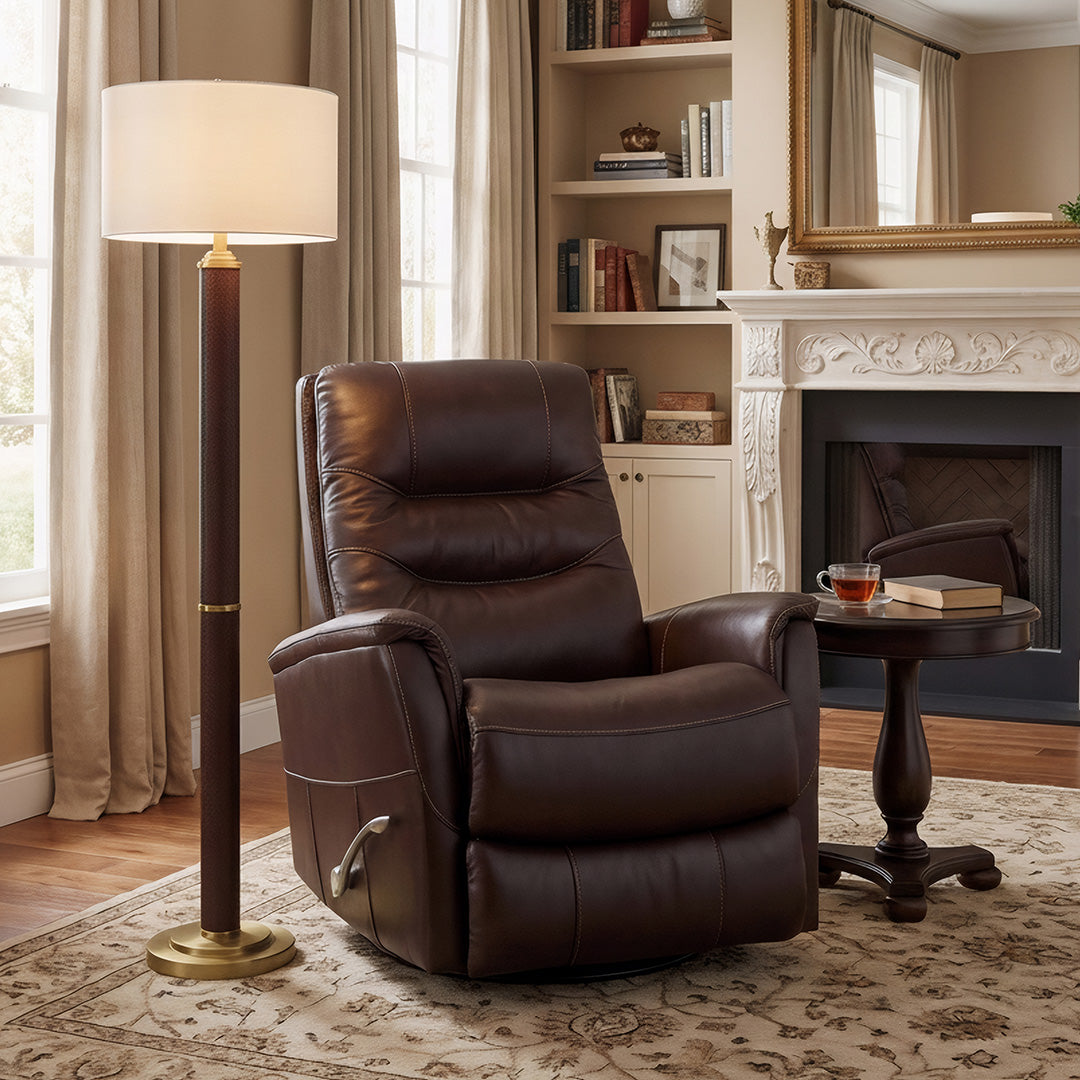
The Real Truth About Leather Recliner Durability
Picture walking into a showroom and spotting two leather recliners sitting side by side. From five feet away, they look nearly identical. Both feature rich brown upholstery, padded armrests, and inviting divided back cushions. Then you flip the price tags: one chair sits under $1,000, while the other runs close to $2,000. The hangtag lists a flurry of industry jargon, but it does not tell you why one costs twice as much, or what happens when your kids climb on it and the dog jumps up for movie night.

Sales tags often toss around terms like genuine leather, top-grain, leather match, bonded hide, or breathable faux leather without explaining the practical differences. Choose the wrong construction, and you could face peeling vinyl, cracked seams, or a squeaking, wobbly mechanism after just a few years of regular use.
Furniture Fair has been family-owned and operated since 1963 across Ohio, Kentucky, and Indiana. To cut through the marketing noise, we sat down with Doug Miller, who has spent over thirty years delivering and selling furniture for Furniture Fair. The insights below reflect the straight-talking guidance he shares with shoppers on our showroom floor every single day. After reading, you will know exactly which leather label you are looking at, what each price tier actually buys, and whether you should be shopping leather at all.
What Do Leather Recliner Labels Actually Mean?
The upholstery material is typically the single largest factor in the price, breathability, and lifespan of any recliner. Before comparing different recliner types and mechanisms, it helps to understand what the hide label on the tag actually represents in daily performance:
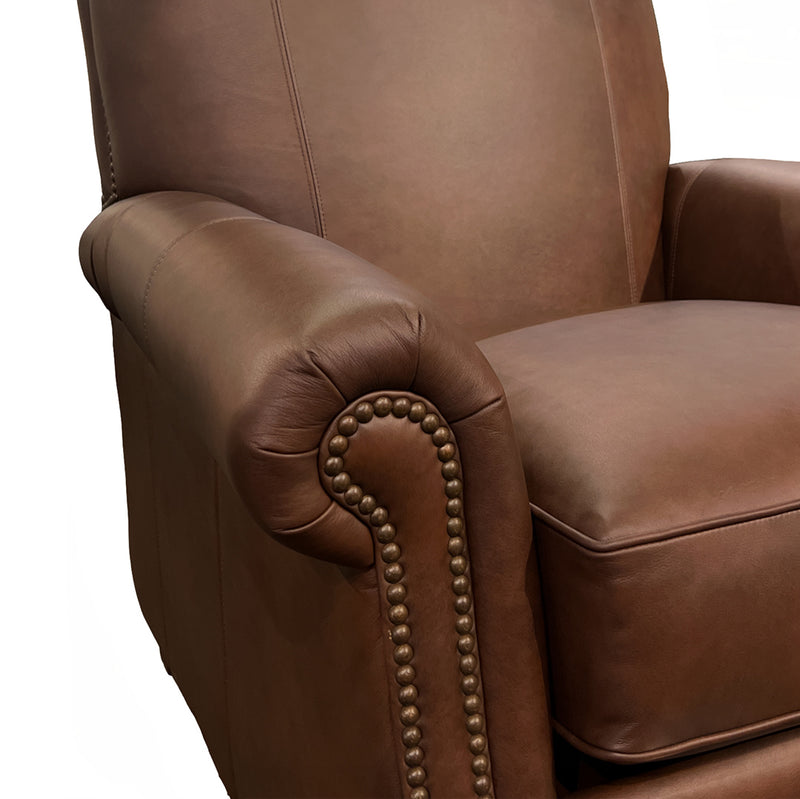
Examining the Upholstery Up Close
On premium top-grain hide, you will notice natural grain variation, supple hand-folded arm pleating, and durable lock stitching along every seam. In contrast, bonded or low-grade synthetic hides feature a repetitive stamped pattern that lacks natural breathability and elasticity under daily sitting pressure.
1. Full-Grain vs. Top-Grain Leather
Full-grain leather comes from the outermost layer of the hide. It is unsanded and unbuffed, displaying the animal's natural surface markings, fat wrinkles, and healed scars. It breathes exceptionally well and develops a rich natural patina as it ages, but it is also the most expensive and absorbs liquids quickly if left unprotected.
Top-grain leather also comes from the premium outer layer, but the surface is lightly buffed or corrected to minimize blemishes, then sealed with a protective finish or pigment. Top-grain leather provides the strongest balance of natural comfort and everyday stain resistance, and it does not peel or delaminate like bonded or synthetic materials.
2. Top-Grain Leather Match
A leather match recliner uses genuine top-grain leather on all the high-contact areas your body touches: the seat cushion, backrest, armrests, and footrest. The outside arms and back panel use a closely color-matched vinyl or polyurethane. In our experience, this construction can lower the retail price by roughly 30% to 40% while preserving real leather on high-wear touchpoints.
3. Split Leather
Split leather is created from the lower, fibrous layers of the hide after the top-grain layer is separated. Because it lacks the tight natural surface grain, manufacturers typically apply a heavy polyurethane coating embossed with an artificial leather texture. Split leather is stiffer than top-grain, has less natural stretch, and requires routine conditioning to keep the coating from stiffening over time.
4. Faux Leather & Bonded Leather
Faux leather consists of synthetic polyurethane or vinyl applied over a fabric backing. It resists stains and cleans easily, though it does not breathe like genuine hide. Bonded leather, on the other hand, consists of shredded leather scraps bonded together with adhesives under a plastic topcoat. In our experience, bonded leather is prone to peeling and flaking, typically within three to five years of frequent daily use.
Under the Federal Trade Commission's Guides for Select Leather and Imitation Leather Products (16 CFR Part 24), manufacturers are prohibited from marketing bonded leather as genuine leather without clearly disclosing its shredded, composite composition.
How Much Does a Good Leather Recliner Cost?
Furniture Fair uses an honest Good, Better, Best ranking to help you evaluate materials, mechanisms, and expected longevity. At our store, the Good tier is mostly high-performance faux leather running about $450 to $1,000, while genuine leather recliners start around $900 in our Better tier and extend to $4,900 in our Best tier.

Good Tier
About $450 to $1,000 (Faux Leather) / Genuine Match from ~$1,400Entry Comfort & Practical Performance
The Good tier at Furniture Fair consists primarily of durable polyurethane and breathable faux leather recliners from makers like Signature Design by Ashley, typically priced between $450 and $1,000. These chairs deliver the tailored look of leather at a starter budget. If you want genuine leather in this tier, the Ashley Gravier Power Recliner is our sole Good-tagged genuine leather match option (starting under $1,500), featuring top-grain hide on the seating areas paired with matching vinyl on the sides and back.
- Seating Surfaces: Mostly performance polyurethane faux leather, with select models like the Gravier offering top-grain leather match.
- Frame: Corner-blocked frame with metal reinforced seat (Gravier).
- Recline Type: Smooth manual pull-tab or single-motor power recline systems.
- Expected Lifespan: 5 to 8 years (general expectation, not a warranty; actual life depends on use and care).
- Best For: Starter apartments, guest rooms, secondary dens, or anyone who wants a clean leather look without spending over $1,000.
Better Tier
About $900 to $2,100Top-Grain Seating & Multi-Motor Power
The Better tier represents the sweet spot for most families seeking authentic leather durability. Genuine leather and leather match recliners in this tier run from about $900 to $2,100. Popular models include the Home Stretch Alta, Kuka Charles, Cheers Madrid, Home Stretch Beaumont, Futura Delta, Home Stretch Franklin, Moto Motion Tribeca, and Moto Motion Clark. These chairs feature genuine top-grain leather on seating surfaces, but frames vary by design: for example, the Home Stretch Alta and Beaumont list 3/4-inch plywood with an oak seat box, while the Moto Motion Tribeca and Clark list an all-steel seat box with mortise and tenon arms and back.
- Seating Surfaces: Genuine top-grain leather on the seat cushion, backrest, armrests, and footrest, with color-matched split leather or vinyl on exterior sides and back.
- Frame: Construction varies by manufacturer, typically 3/4-inch plywood with an oak hardwood seat box, or an all-steel seat box with mortise and tenon joinery.
- Recline Type: Manual gliding or multi-motor power systems (dual or triple power) featuring independent power headrests, power lumbar, and built-in USB ports.
- Expected Lifespan: 10 to 15 years (general expectation, not a warranty; actual life depends on use and care).
- Best For: Primary living rooms, everyday family lounging, and anyone who wants ergonomic lumbar and neck adjustment.
Best Tier
About $1,800 to $4,900Premium Leather & Longer Warranties
Best tier chairs pair premium leather with longer warranty coverage on many models. Pricing runs from about $1,800 to $4,900, with popular choices including the Bassett Raymond, GTR Legend, custom-order seating from Smith Brothers (such as the Judy and James), and handcrafted heirlooms from Stickley (such as the Durango and Hawley). Chairs in this tier are most often full top-grain leather covering every surface, though select models like the Bassett Raymond pair top-grain seating with matching vinyl on exterior panels to keep costs accessible. Our Smith Brothers leathers are pigmented (protected) for everyday durability against stains without sacrificing supple texture, while pieces like the Stickley Durango feature natural semi-aniline hide. If you are considering Stickley recliners like the Durango or Hawley, our Stickley showrooms let you customize Stickley pieces in person. Frame construction varies: several Best tier chairs, like Judy and Durango, list solid hardwood frames. For example, the Smith Brothers Judy features a solid hardwood frame backed by a lifetime warranty on the frame, springs, and cushions, with five years on parts and one year on labor.
- Seating Surfaces: Most often full top-grain leather covering every surface, including outside arms and back panels (with select models using premium leather and vinyl match). Our Smith Brothers leathers are protected pigmented hide, while Stickley offers rich semi-aniline leather.
- Frame: Several Best tier models list solid hardwood frames (such as Judy and Durango); check the product page for the chair you are considering.
- Recline Type: Smooth power mechanisms or effortless push-back designs.
- Expected Lifespan: 15 to 25+ years (general expectation, not a warranty; actual life depends on use and care).
- Best For: Buyers who view seating as a long-term investment in comfort, durability, and custom order leather tailoring.
Which Leather Recliners Would We Point You To at Each Price?
When shoppers visit our showrooms across Ohio, Kentucky, and Indiana, our team guides them toward specific models based on their living room layout, daily routine, and personal comfort priorities. Testing a recliner in person remains the most reliable way to confirm whether its dimensions, lumbar support, and recline speed match your body. Here are eight real recliners from our catalog that illustrate each price and quality tier:
Good Tier
Starting Point: Triple-Power Value
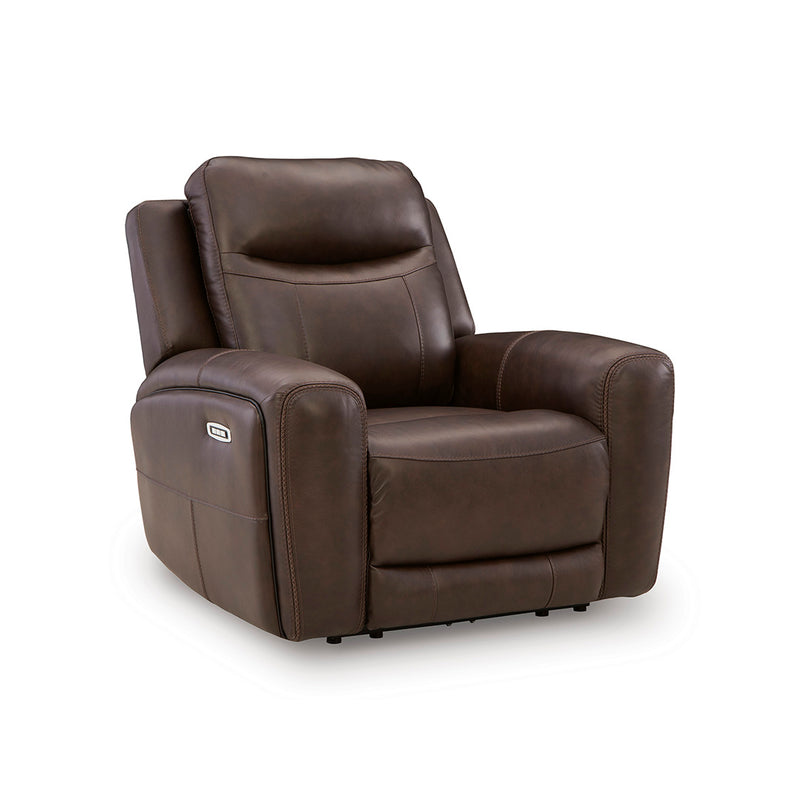
Gravier Leather Power Recliner
$1,375.04
Leather Type: Top-grain leather on all touch areas with faux leather match (material: leather / polyester / PVC).
Warranty: 1 year.
Who It Is For & Tradeoff: Features power recline, power headrest, power lumbar, and zero-gravity positioning for shoppers who want multi-motor adjustability in our Good tier under $1,500. The tradeoff is that exterior side and back panels use faux leather match rather than real hide.
View Gravier Details → Better Tier
Everyday Family Lounging & High-Tech Comfort
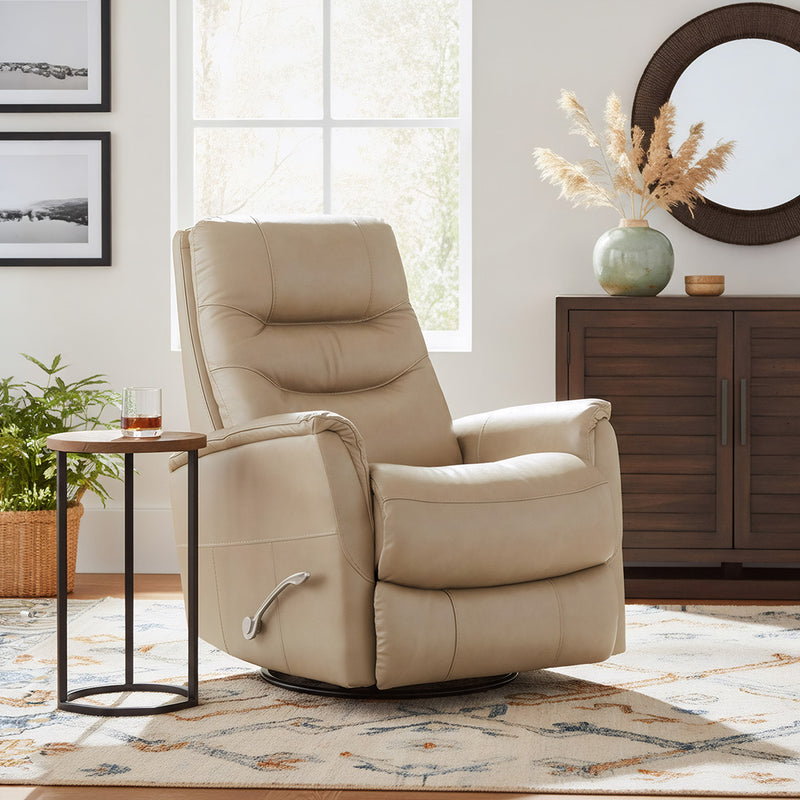
Alta Leather Swivel Glider Recliner
$859.04
Leather Type: Top-grain leather match (genuine top-grain hide across seating surfaces).
Warranty: 1 year on frame, limited lifetime on mechanism.
Who It Is For & Tradeoff: Well suited for nurseries, smaller spaces, or casual reading corners wanting authentic leather and 360-degree swivel gliding at our most accessible Better-tier price point. The tradeoff is manual pull-handle operation with standard fixed resting positions.
View Alta Details →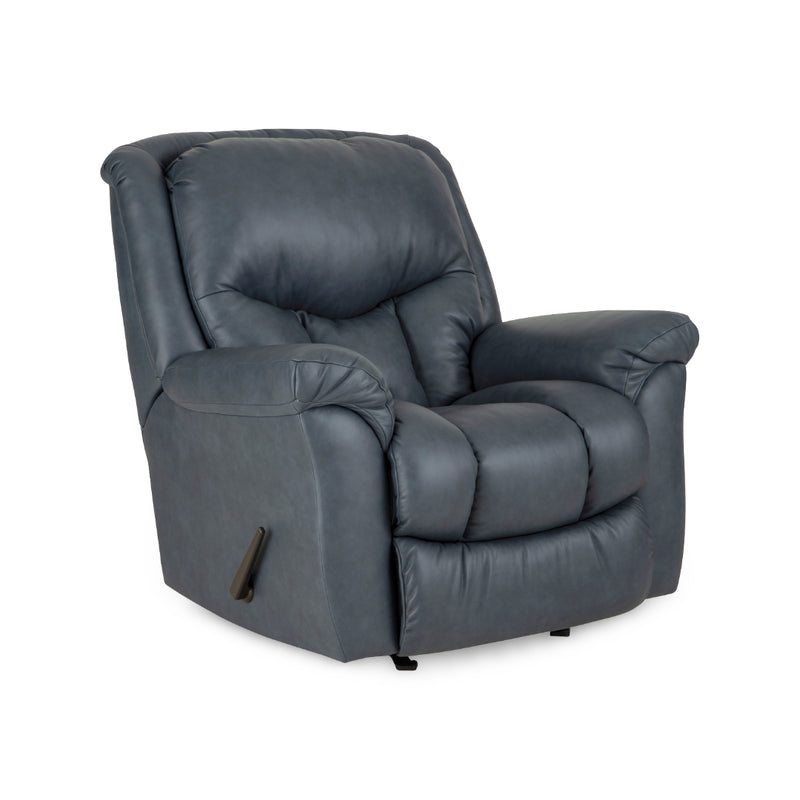
Beaumont Leather Rocker Recliner
$1,031.04
Leather Type: Genuine top-grain leather on all seating surfaces.
Warranty: 1 year on frame, limited lifetime on mechanism.
Who It Is For & Tradeoff: A solid choice for broader sitters seeking a wide, deeply padded seat, soothing rocker motion, and sturdy American-made framing. The tradeoff is manual operation that requires leg pressure to click the footrest closed.
View Beaumont Details →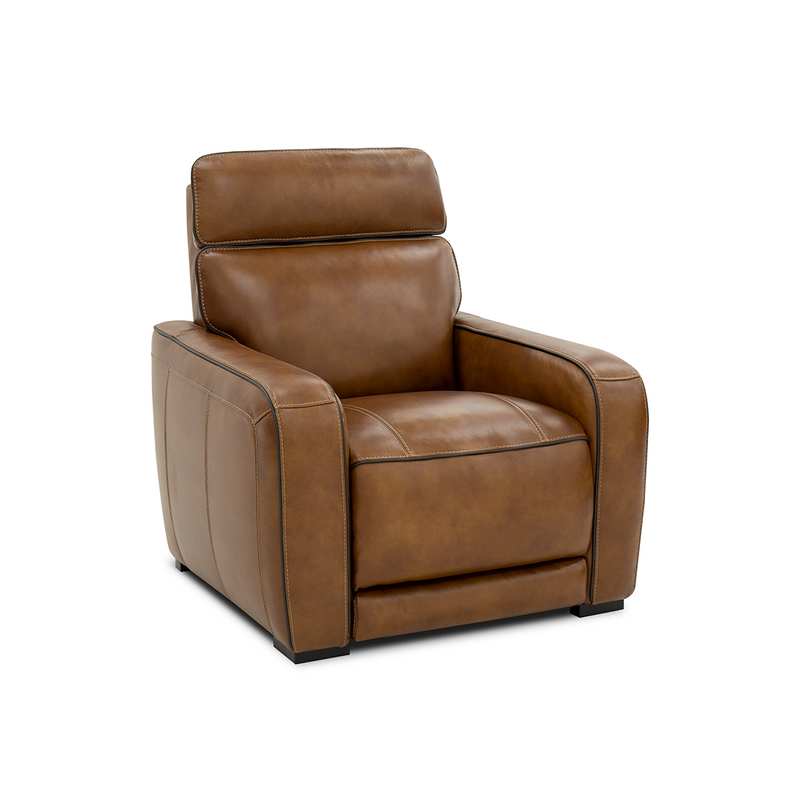
Tribeca Leather Power Recliner
$1,805.04
Leather Type: Top-grain leather.
Warranty: 3 years on mechanism, 3 years on electronics.
Who It Is For & Tradeoff: A strong match for movie buffs and sports fans wanting power headrest, power lumbar, heat, massage, and built-in Bluetooth audio speakers. The tradeoffs are that the chair weighs 174 lbs and requires a nearby wall outlet.
View Tribeca Details →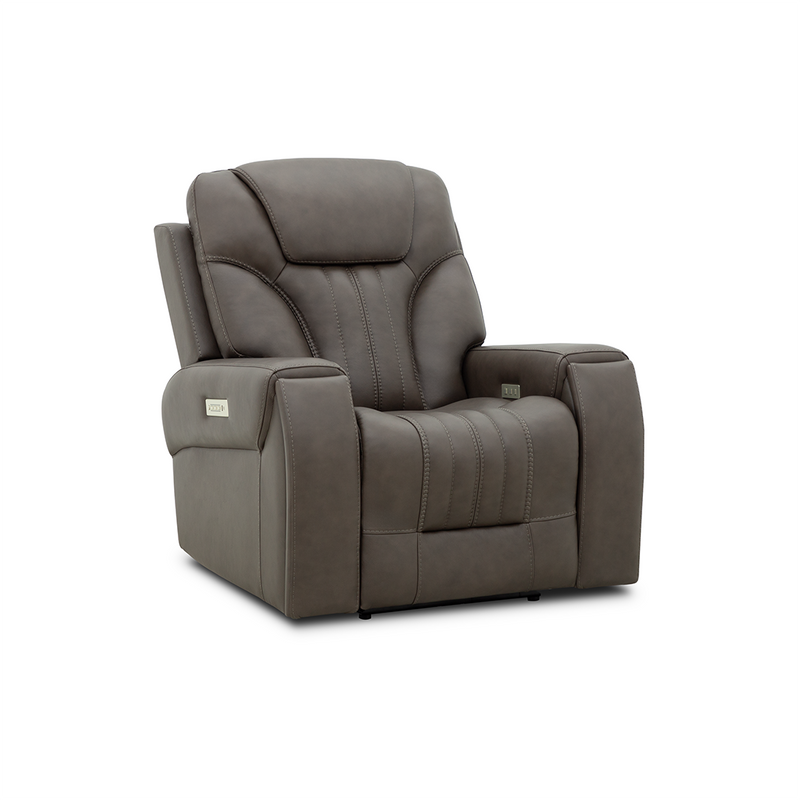
Clark Zero-G Home Theater Recliner
$1,977.04
Leather Type: Top-grain leather.
Warranty: 3 years on mechanism, 3 years on electronics.
Who It Is For & Tradeoff: Built for home theater enthusiasts who want zero-gravity reclining, heated air massage, and integrated sound. The tradeoff is its generous physical footprint: it measures 39 in. wide by 43 in. deep and weighs 182 lbs, requiring dedicated floor space.
View Clark Details → Best Tier
Premium Leather & Longer Warranties
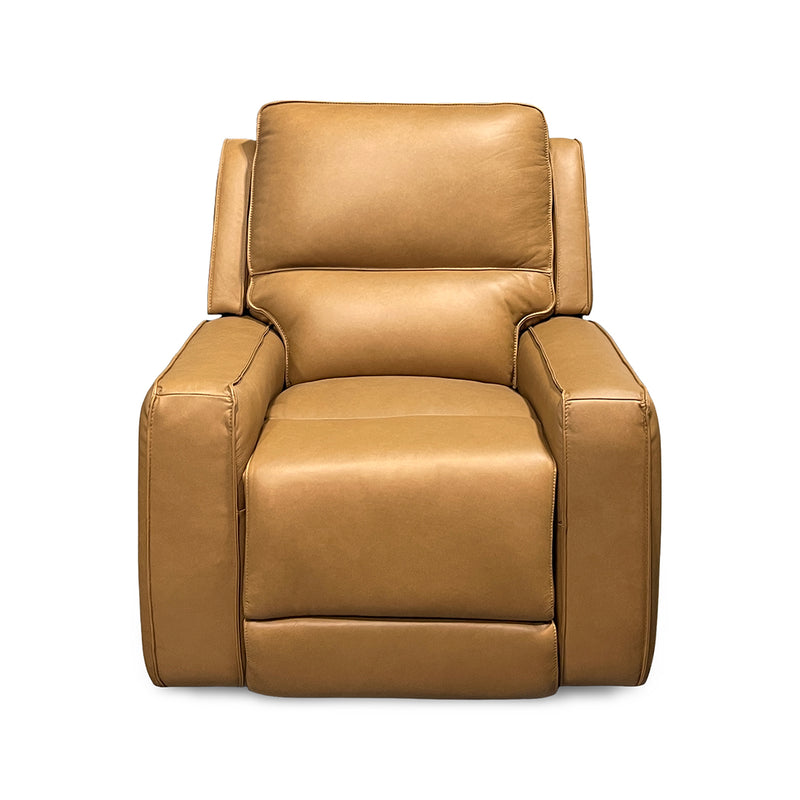
Raymond Leather Zero-G Power Recliner
$1,891.04
Leather Type: Top-grain leather with vinyl accents.
Warranty: Limited lifetime on frame, springs, and mechanisms, 1 year on all other components.
Who It Is For & Tradeoff: Great for shoppers seeking zero-gravity power recline and solid Bassett build quality at an accessible entry point for our Best tier. The tradeoff is that exterior side and back panels use vinyl accents rather than leather hide to achieve this price point.
View Raymond Details →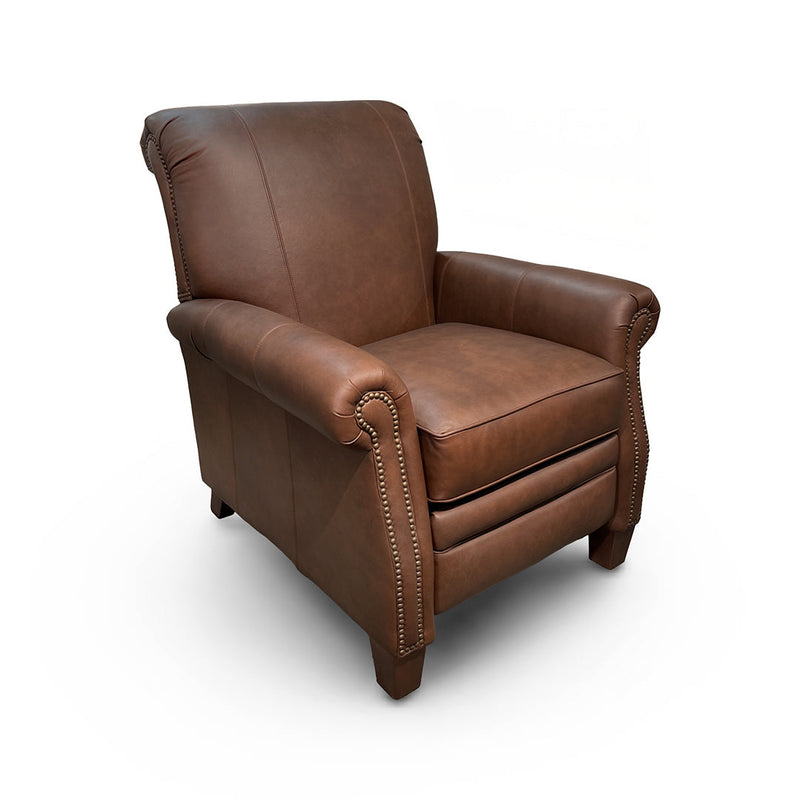
Judy Leather Press Back Recliner
Request Quote
Leather Type: Pigmented and protected leather.
Warranty: Lifetime on frame, springs, and cushions, 5 years parts, 1 year labor.
Who It Is For & Tradeoff: Built for classic formal styling with strong warranty coverage, with a solid hardwood frame backed by lifetime warranties on frame, springs, and cushions. The tradeoff is manual press-back operation with no power assist.
View Judy Details →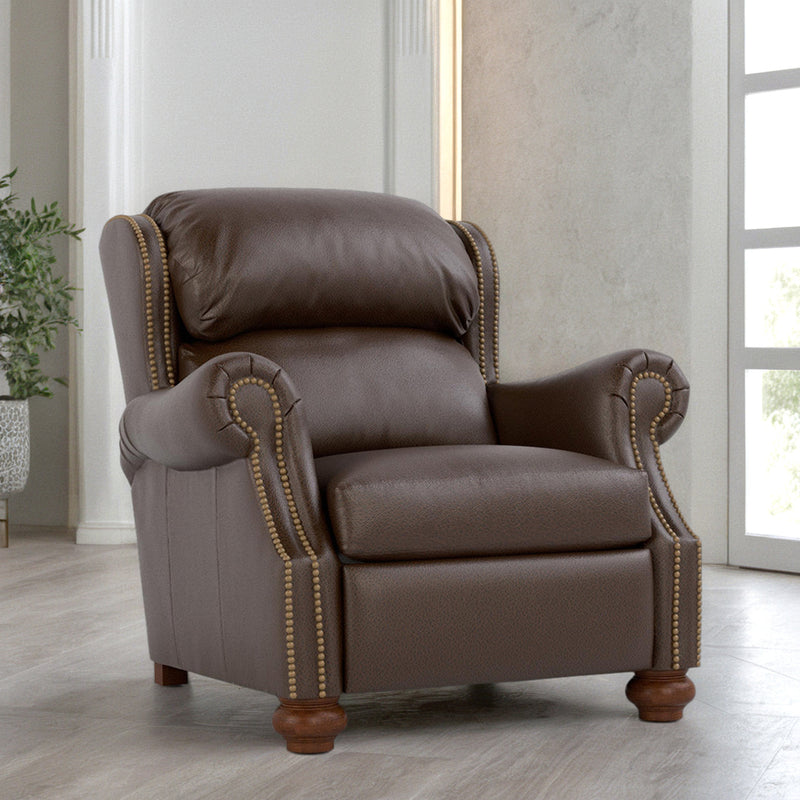
Durango Leather Recliner
Request Quote
Leather Type: Semi-aniline premium leather over a solid hardwood frame.
Warranty: Five-year manufacturer limited warranty.
Who It Is For & Tradeoff: Features a solid hardwood frame, American manufacturing, hand-applied nailhead trim, and rich semi-aniline leather, with custom orders available. The tradeoff is a substantial investment, and natural semi-aniline leather requires routine conditioning to protect its natural oils.
View Durango Details →Notice that warranty coverage does not track retail price neatly: a more moderately priced recliner like the Bassett Raymond carries a limited lifetime frame warranty, while a luxury benchmade piece like the Stickley Durango carries a five-year manufacturer limited warranty, so always ask to review the manufacturer warranty sheet before you buy.
Specifications and product availability checked against our product pages in October 2026.
I have been delivering and selling furniture for over thirty years, and here is what I tell folks walking into our showroom: you do not need the most expensive full aniline leather recliner in every room of your house. If you are putting a chair in a busy family room where kids are eating popcorn, dogs are jumping up, and everyone is piling in for movie night, a protected top-grain leather or a quality leather match on the sides and back is going to hold up better and cause you a whole lot less stress. Save the pure uncorrected aniline leathers for your quiet study or master bedroom where you can enjoy that natural patina without panicking over an accidental spill.

Comparison Table: What You Are Really Paying For
To see how quality levels differ across daily ownership, review this side-by-side summary of materials, construction, and realistic lifespans:
| Feature | Good (About $450 - $1,000) | Better (About $900 - $2,100) | Best (About $1,800 - $4,900) |
|---|---|---|---|
| What You Are Paying For | Everyday affordable seating with leather look | Top-grain seating comfort & power ergonomics | Solid hardwood on select models, premium leather & longer warranties |
| Leather Grade | Faux leather or leather match (e.g. Gravier) | Top-grain seating surfaces with split or vinyl match | Most often full top-grain or semi-aniline (select models include leather and vinyl) |
| Frame Material | Corner-blocked frame with metal reinforced seat (Gravier) | 3/4" plywood with hardwood seat box, or steel seat box with mortise and tenon | Solid hardwood on several models (Judy, Durango); check the product page |
| Reclining Mechanism | Standard single-motor or manual pull | Dual or triple power (headrest & lumbar) | Precision power or smooth press-back |
| Seat Foam and Springs | High-resiliency foam cushions, corner-blocked frame with metal reinforced seat (Gravier) | 2.2 density foam with 8 gauge sinuous springs (Tribeca); 2.0 density foam with 8 gauge sinuous springs (Clark) | 2.5 density foam (Raymond). Examples from our product pages; ask for specs on the chair you are considering. |
| Expected Lifespan | 5 to 8 years (general expectation, not a warranty; actual life depends on use and care) | 10 to 15 years (general expectation, not a warranty; actual life depends on use and care) | 15 to 25+ years (general expectation, not a warranty; actual life depends on use and care) |
| Example Brands | Signature Design by Ashley | Moto Motion, Home Stretch, Futura, Kuka | Smith Brothers, Stickley, Bassett, GTR |
Scroll horizontally to compare all quality tiers
Why Does Frame Construction Matter More in a Recliner?
When shopping for stationary seating like a standard sofa, a small amount of frame flex is tolerable. In a reclining chair, however, frame rigidity is critical. Every time you pull the recline handle or activate a power motor, the steel mechanism exerts significant torsional torque across the arms and base of the chair. A reinforced frame and sturdy seat box prevent mechanical twisting, protecting the reclining mechanism from loosening or squeaking over years of daily use.

Solid Kiln-Dried Hardwood
Solid hardwoods like maple, ash, and oak undergo kiln drying to typically reduce internal moisture to around 8% or lower, preventing warping, cracking, and joint loosening. High-end manufacturers secure these joints using double dowels, mortise-and-tenon connections, and heavy corner blocks held with glue and screws. The frame resists mechanical torque, preventing motor strain and keeping joints tight for decades of daily motion.
Engineered Plywood & Composite
Plywood is not automatically a weak material. Thickness, joinery, and seat-box construction matter far more than the label alone. For instance, the Home Stretch Beaumont recliner pairs heavy 3/4-inch plywood with an oak hardwood seat box, creating a sound, durable everyday build that handles regular family use. In contrast, lower-priced chairs built with thinner multi-ply or OSB without hardwood corner blocks can flex under continuous mechanical torque, causing fasteners and staples holding the mechanism to loosen over time. If a recliner starts developing a noticeable wobble, squeak, or rubs against one side when opening (one of the most common recliner problems), frame flex or loosened fasteners are typically the underlying cause.
Should You Choose Power or Manual Recline?
Beyond the leather hide and frame, your next major decision is how the chair opens and closes. Choose power recline if you need precise ergonomic positioning and smooth assist, or stick with manual if you want quick operation without cords. Both systems have distinct advantages depending on who is using the chair and what power recline features and benefits matter most to your household. We compare these operational differences in detail in our manual vs. power reclining comparison.
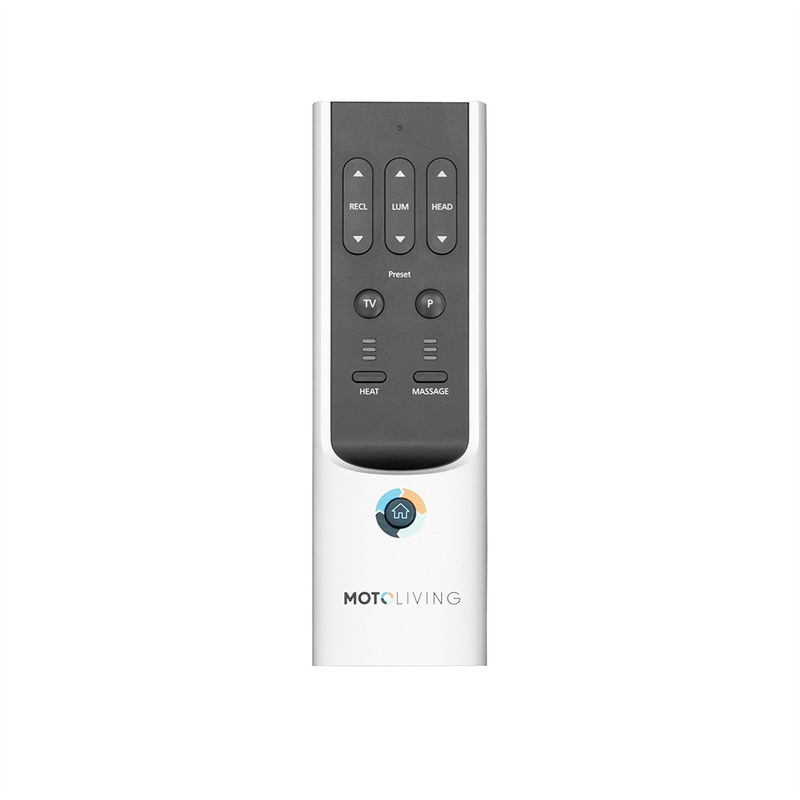
Precision Power Controls
Modern power reclining hand controls allow independent adjustments for footrest extension, power lumbar support, and motorized headrest tilt, as well as integrated heat and massage presets. This motorized articulation delivers customized ergonomic support that manual mechanisms cannot replicate.
Manual Recline Mechanisms
Manual recliners operate with a side handle, pull tab, or simple body pressure on push-back models. They recline quickly and do not require proximity to a wall outlet or cords running across your living room rug. However, manual chairs offer limited stopping positions, usually upright, TV position, and full recline. They also require leg strength to push the footrest closed, which can be challenging for anyone with knee, hip, or back sensitivity.
Power Recline Mechanisms
Power recliners use smooth, quiet electric linear actuators that let you stop at any position with fingertip button control. Advanced power chairs include independent power headrests so you can keep your neck supported while watching TV reclined, as well as power lumbar support. They require access to a wall outlet or an optional rechargeable lithium battery pack, but they provide exceptional customized comfort.
When Is Leather the Wrong Choice?
Part of being honest about furniture is acknowledging that leather is not the ideal solution for every household. If your household includes unclipped pet claws, intense unshaded sunlight, or a budget under about $900, weighing faux leather against high-performance fabric is usually a smarter, longer-lasting approach. Here are three realistic situations where choosing a different upholstery material makes much more sense:

1. Active Pets with Unclipped Claws
While leather wipes clean effortlessly from pet hair and muddy paws, sharp cat claws or excited dog paws can puncture through leather hide. Unlike woven fabrics where fibers can shift, a punctured or scratched leather surface cannot be easily re-woven. If pets frequently jump or scratch on your furniture, high-performance stain-resistant fabrics like Reliapel or Revolution are a safer, more forgiving choice.
2. Unconditioned Placement in Direct Sunlight
Natural leather is an organic material that reacts to room conditions. Placing a leather recliner directly in front of south-facing floor-to-ceiling windows or next to a forced-air heat vent will quickly dry out natural oils. Without regular conditioning every six months (learn more in our guide on how to care for leather furniture), the leather can stiffen and develop surface cracks. If your room cannot accommodate shaded placement, consider performance fabric.
3. Budgets Under About $900
Under about $900, genuine leather recliners are rare. At this price point, your primary choice is between high-performance faux leather and a durable woven fabric. If your home has pets or active kids where claws or sharp toys might puncture synthetic hide, a heavy woven performance fabric like Reliapel or Revolution will usually hold up better over time. If easy spill cleanup and wiping down pet hair are your main priorities, quality faux leather from our Good tier (starting around $450) offers a practical solution.
Frequently Asked Questions About Leather Recliners
What is the difference between top-grain leather and leather match in a recliner?
Top-grain leather is genuine hide from the outer layer of the cowhide, lightly buffed and sealed with a protective finish for stain resistance, durability, and breathability without peeling. A leather match recliner pairs genuine top-grain leather on high-contact touchpoints (seat, back, and armrests) with color-matched vinyl or polyurethane on exterior sides and back panels to lower the cost by roughly 30% to 40% in our experience.
How long should a quality leather recliner last?
Lifespan ranges are general expectations, not a warranty; actual life depends on use and care. An entry-level recliner in our Good tier (typically faux leather or entry match) often lasts around 5 to 8 years under moderate use. A mid-tier Better recliner with genuine top-grain seating, where frames vary (3/4-inch plywood with a hardwood seat box, or a steel seat box with mortise and tenon joinery), typically lasts 10 to 15 years with routine leather care. A Best tier recliner, where several models like Judy and Durango list solid hardwood frames, can last 15 to 25 years or more.
Is a power recliner more reliable than a manual recliner?
Both have clear tradeoffs. Manual recliners have fewer electrical components, require no wall outlet, and cannot suffer motor failure, but their spring-loaded mechanisms experience sudden mechanical stress when kicked closed. Power recliners provide smooth, infinite adjustments and are significantly easier for anyone with knee, hip, or back trouble, but they introduce electric motors, wiring, transformers, and hand controls or switches that can require service over time. If a power chair stops responding, check our guide to troubleshooting your power recliner to check connections before assuming motor failure.
Should I choose leather or performance fabric if I have pets?
If you have cats or active dogs with unclipped claws, high-performance woven fabrics like Reliapel or Revolution are generally a safer choice than leather. While leather wipes clean easily from drool and dirt, claw punctures cannot be woven back together. If you prefer leather with pets, choose a protected, pigmented top-grain leather rather than an absorbent aniline hide.
How to Test a Recliner Before Making Your Decision
The most reliable way to know if a recliner fits your body is to sit in it. When testing a chair, confirm your feet sit flat on the floor in the upright position and your lower back stays fully supported as you recline.
01 Sitting Height
Check Your Feet
When sitting upright, your feet should rest flat on the floor with your knees at a comfortable 90-degree angle, with no pressure pinching the underside of your thighs.
02 Back Ergonomics
Test the Lumbar Curve
Recline into TV position. The lower cushion should fill your lumbar arch naturally, preventing an empty gap that can trigger lower back fatigue during extended sitting.
03 Room Flow
Measure Clearances
Recliners need clearance behind the back and in front of the footrest. Confirm whether a wall-saver design (which slides forward into recline) is needed for your room.
04 Touch & Feel
Inspect the Leather Hide
Top-grain leather feels warm and supple to your hand, whereas synthetic faux leathers often feel cold or plasticky at first touch and lack natural elasticity.

Finding the Right Leather Recliner for Your Home
For most households, a Better tier recliner featuring genuine top-grain leather across the seating surfaces and a sturdy frame delivers a strong balance of everyday comfort, longevity, and value. Keep in mind that leather match models use matching vinyl on exterior sides and back panels to keep costs accessible, which works wonderfully unless your chair floats in the center of an open-concept room where the back is prominently displayed.
Before you decide, read our guide to common recliner problems to avoid and our breakdown of power recline features and benefits. When you are ready to feel how each tier supports your posture, schedule a showroom appointment at Furniture Fair. Bring your room measurements and sit in all three tiers side by side with our knowledgeable sales team across our showrooms in Ohio, Kentucky, and Indiana.
Need help getting it home? Furniture Fair offers convenient delivery through our own in-house delivery team, making it easy to enjoy your new furniture with confidence. Read our delivery options explained for full details.
Shop Leather Recliners